


“We have to pursue a bipartisan effort to address health insurance. It’s killing our country. Nobody can take it anymore.”
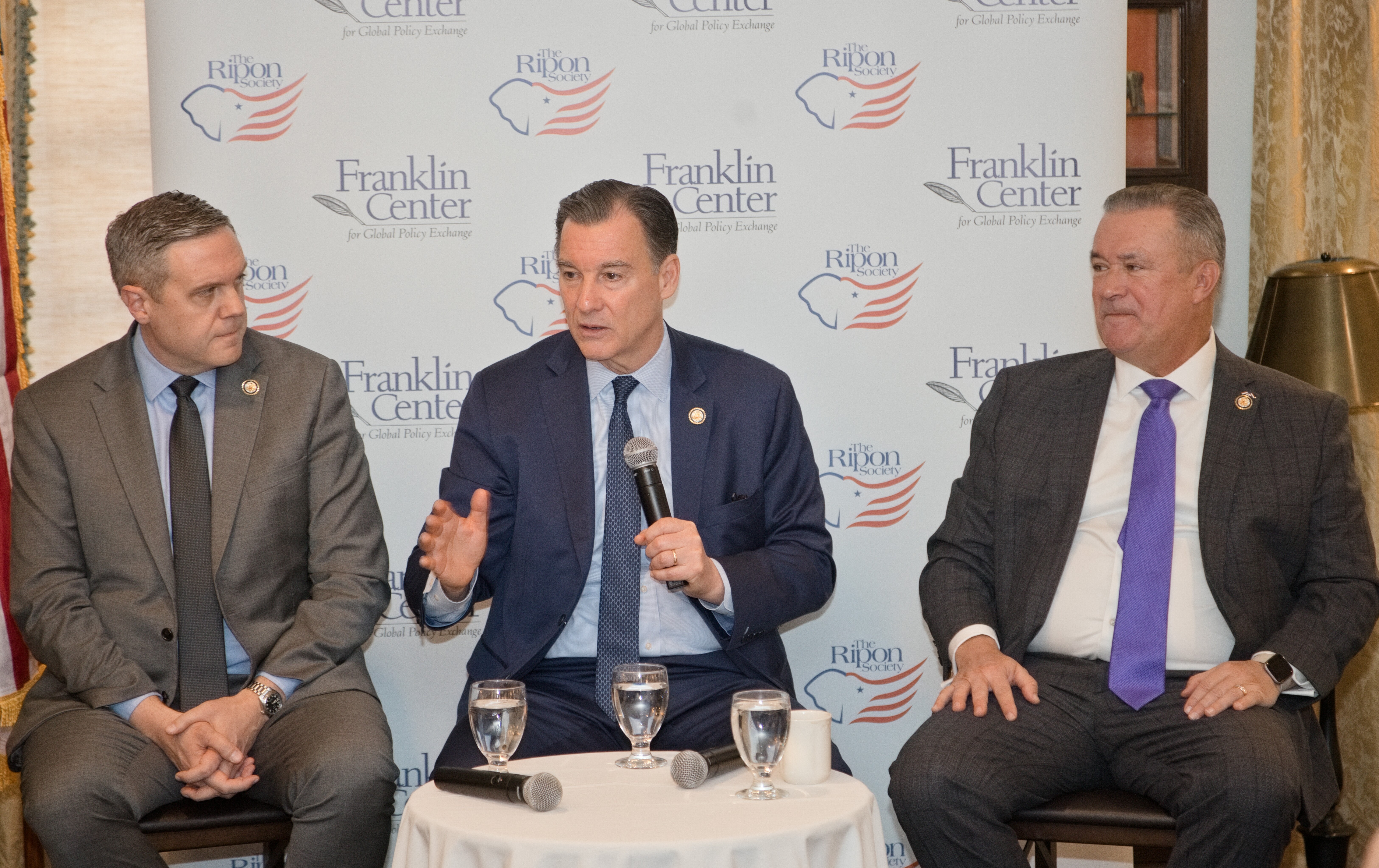
WASHINGTON, DC – On the eve of President Trump’s first State of the Union Address of his second term, three bipartisan members of the Problem Solvers Caucus (PSC) gathered to offer a frank assessment of the state of health care in America — and a shared call for Congress to act – at a breakfast meeting yesterday morning of The Ripon Society and the Franklin Center for Global Policy Exchange.
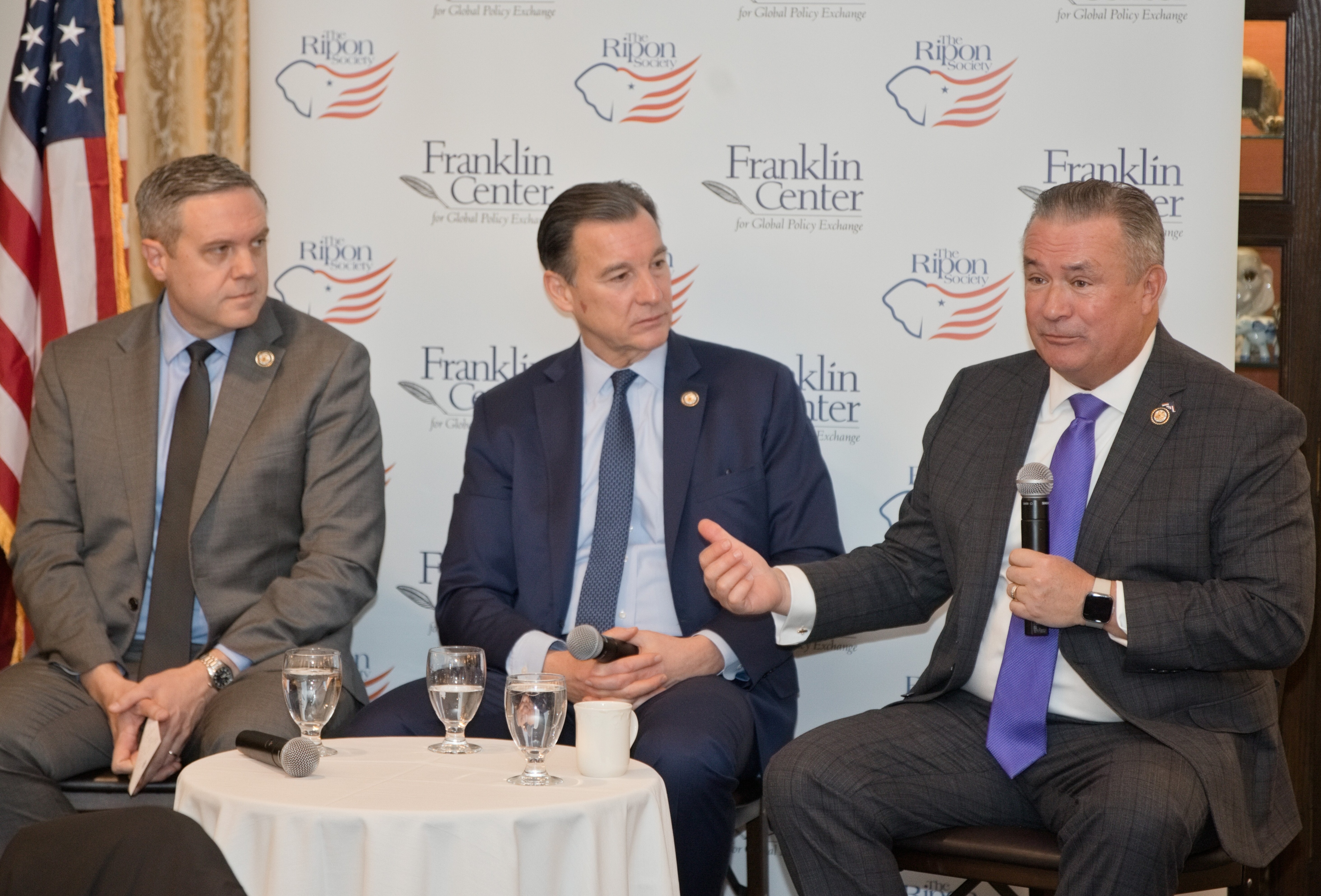
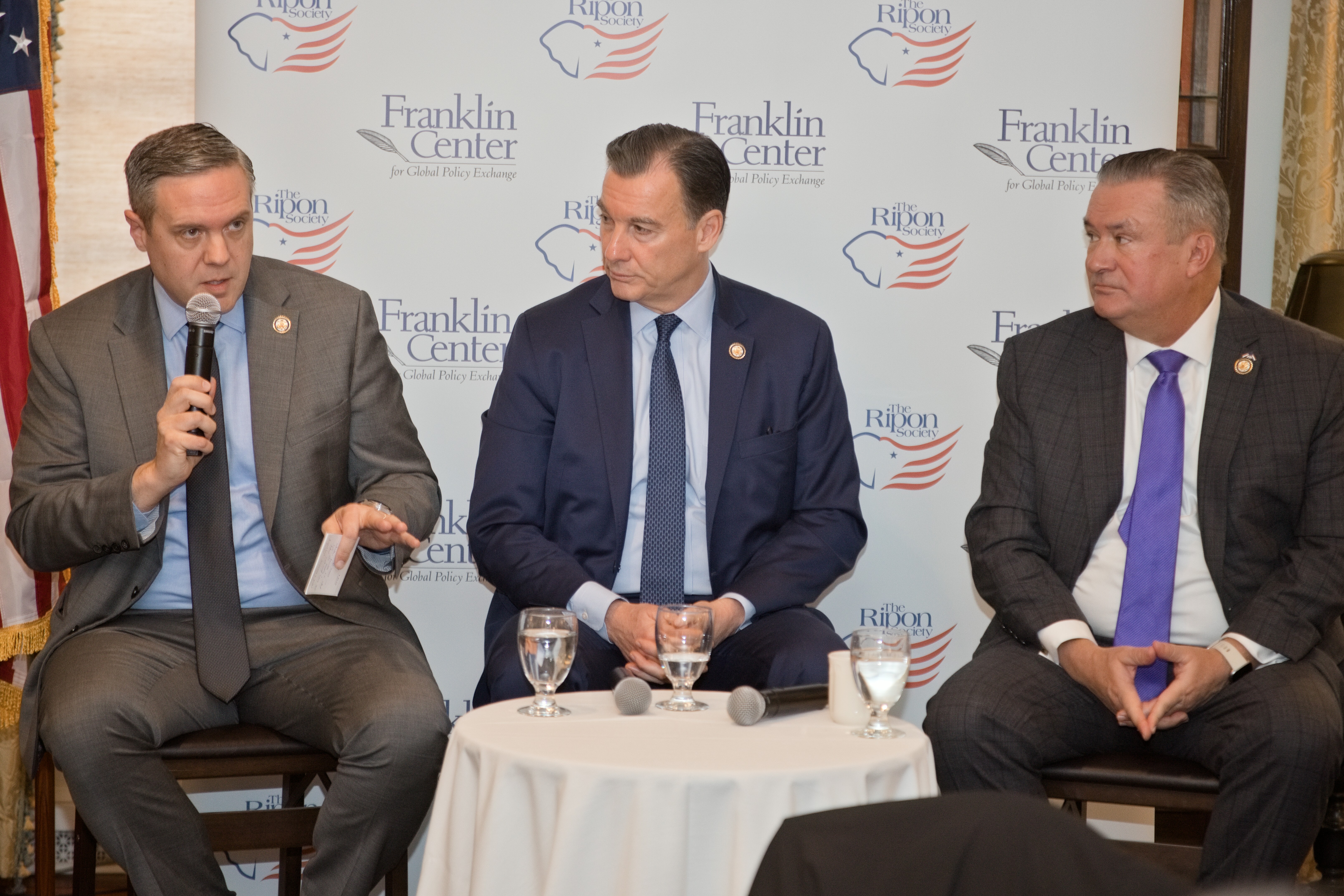
The members were PSC Democratic Co-Chair Rep. Tom Suozzi (D-NY-03), PSC Republican Whip Rep. Don Bacon (R-NE-02), and PSC member Rep. Jeff Hurd (R-CO-03).
Suozzi opened the conversation by drawing a direct line between the government shutdown and the renewed bipartisan push to extend expiring health care premium tax credits.
“We laid out a framework for a bipartisan compromise to extend the premium tax credits,” the New York Congressman shared. “And the idea was that it would be temporary, which would buy us some time to avoid these spikes in health insurance costs, while addressing to some of the concerns that Republican colleagues had with the way that the premium tax credits were first put in place through the ACA. One big part of that was to put income caps in place – you shouldn’t make above a certain amount of money and be able to get a big subsidy from the government to pay for your health insurance.”
Suozzi then warned of the consequences should those credits be allowed to lapse. Without them, he argued, many Americans would simply forgo coverage — with ripple effects felt across the entire insurance market.
“People in that circumstance are not going to buy health insurance,” he warned. “They’re going to shrink the size of the risk pool, and it’s going to cause everybody’s health insurance rates to go up. A lot of people bought insurance because of the premium tax credits, and that expanded the risk pool.”
He then reflected on the progress made in late 2025, which was ultimately overshadowed by developments in Venezuela and Greenland — leaving the caucus’s bipartisan work to stall in the Senate and Americans without any financial relief.
“The people out here trying to get something done really got quashed in the process,” he said. “It’s the same thing with so many different issues. We have to pursue a bipartisan effort to address health insurance. It’s killing our country. Nobody can take it anymore.”
“We need to have a comprehensive plan that talks about prevention, reducing the overall cost of health insurance, and end-of-life issues. It also needs to talk about the different things that we need to do to reduce the cost of prescription drugs, reduce the cost of hospital stays, to encourage doctors to be doctors, and not to be just businessmen.”
Rep. Bacon framed health care as one of three defining challenges facing the country — alongside the national debt and legal immigration reform — and called for a “legitimate compromise” that addresses the fundamental tension between coverage access and market sustainability.
“I find it’s very hard to talk about health care and find anything bipartisan, but we have to acknowledge that we put people who are high risk in the pool with everybody else. Their costs go up; healthy people get out. That’s the dynamic of what we have right now. We have got to find a way to provide health care for those who have a high-risk condition or preexisting conditions, but we got to find a different way of doing it.
“One way is to have a high-risk pool and put them to the side, use taxpayer money to lower their costs, and then get costs to about the same level as healthy people would pay in the pool of their own. Two, I like the thought of employers negotiating.”
On the broader landscape, Bacon laid out his priorities in plain terms:
“The top issue facing our country right now is the $38 trillion debt,” he stated bluntly. “Nobody in leadership on either side wants to talk about mandatory spending, and the fact that we have more people going into retirement than are going into the workforce.
Rep. Hurd, a first term legislator, argued that premium subsidies address the symptoms of a broken system rather than its root causes — and that durable reform requires structural change and genuine bipartisan commitment.
“The real measure of success is whether working families can afford care without needing federal subsidies,” he observed. “And I think that’s ultimately what we all recognize that the subsidies and issues like that are addressing the symptoms, and we need to be addressing the cause.”
Hurd added that health care transcends partisan and geographic divides.
“This is something that we talk about Red America and Blue America – Republicans and Democrats – coming together on this issue,” he said. “This is an issue for urban America and rural America that pulls us together, including districts like mine. It’s an issue in rural America. It’s an issue in Omaha; it’s an issue in New York. So, it’s important to us. I ran for Congress to fight for rural America, and this is one of those top issues. We need to have institutional seriousness and market realism about how these things work. When premiums spike and all that we’re talking about is subsidies, we are incentivizing the wrong things.
“We need to be talking about structural changes long term as well. There is room for bipartisan work, but Republicans need to be serious about affordability and access, and Democrats need to be serious about sustainability and incentives.
“The biggest risk here is instability and uncertainty. If we can reach solutions that include Republicans and Democrats, together, we will have that predictability that is lasting and durable, and long term will be in the best interest of rural America, urban America, and everywhere between.”
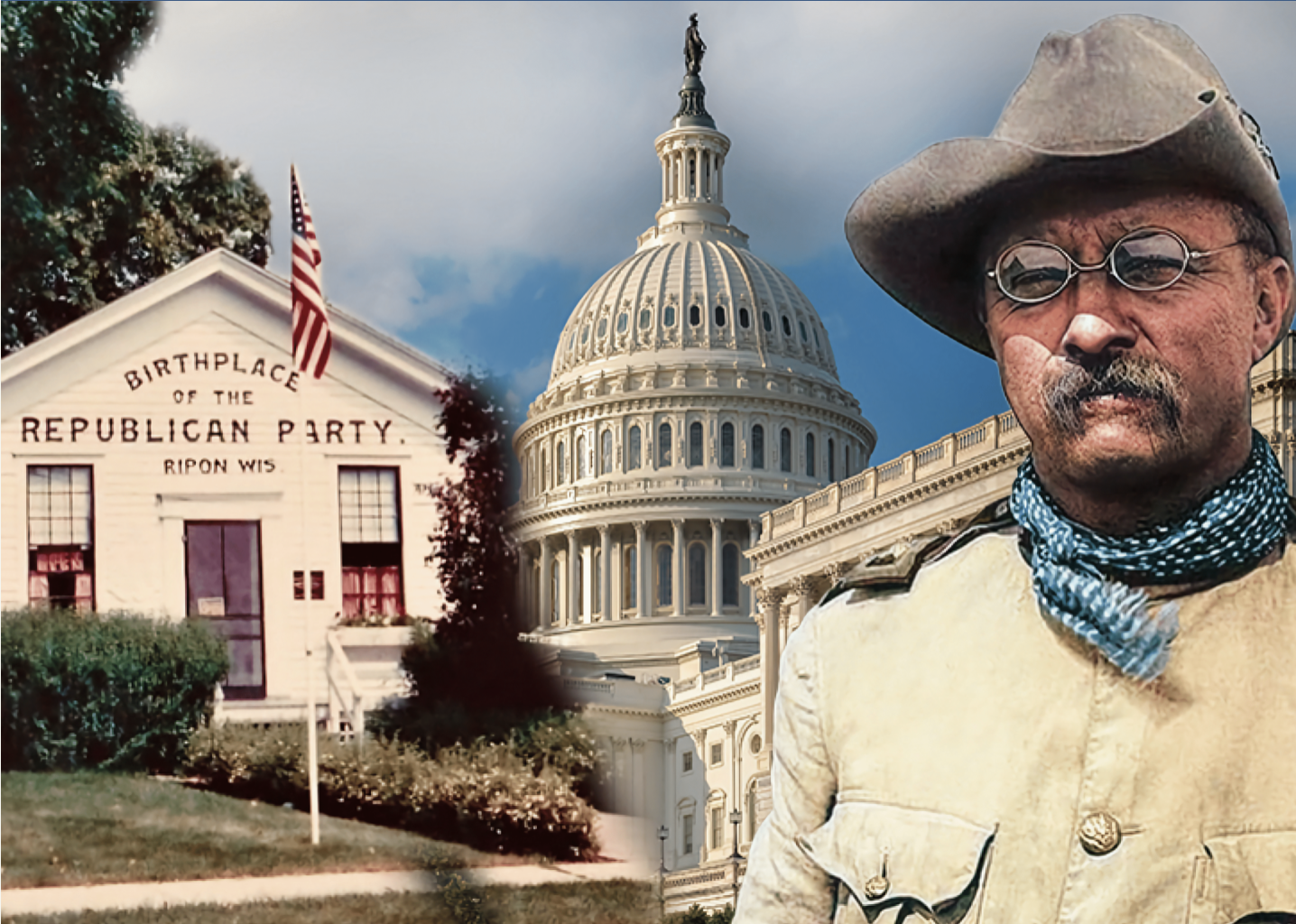
The Ripon Society is a public policy organization that was founded in 1962 and takes its name from the town where the Republican Party was born in 1854 – Ripon, Wisconsin. One of the main goals of The Ripon Society is to promote the ideas and principles that have made America great and contributed to the GOP’s success. These ideas include keeping our nation secure, keeping taxes low and having a federal government that is smaller, smarter and more accountable to the people.
Founded in 1978, The Franklin Center for Global Policy Exchange is a non-partisan, non-profit 501(c)(3) organization committed to enhancing global understanding of important international issues. The Franklin Center brings together Members of the U.S. Congress and their international parliamentary counterparts as well as experts from the Diplomatic corps, foreign officials, senior private sector representatives, scholars, and other public policy experts. Through regular conferences and events where leading international opinion leaders share ideas, the Franklin Center promotes enlightened, balanced, and unbiased international policy discussion on major international issues.