



“We are in this together, regardless of party label, and we have got to figure it out together.”
WASHINGTON, DC – With the national debt exceeding 100 percent of GDP for the first time since World War II, The Ripon Society held a breakfast discussion yesterday morning with two leading voices in the fight to get spending under control – House Financial Services Vice-Chair Congressman Bill Huizenga (MI-04) and Committee for a Responsible Federal Budget (CRFB) President Maya MacGuineas.
Huizenga, a seasoned member of the committee and Chairman of the Bipartisan Fiscal Forum (BFF), opened the discussion by emphasizing the need for bipartisan cooperation on the country’s fiscal challenges.
“We are in this together, regardless of party label, and we have got to figure it out together, because this is not going to be a one-party solution either. … First, you need relationships. You need relationships to build trust, and then you need that trust to then go find solutions.”
MacGuineas, who is also actively involved with the BFF, built on Huizenga’s remarks — noting that bipartisanship alone is not enough to address the country’s deepening fiscal crisis.
“I think the fiscal policy issue, the fiscal situation, we have right now is the perfect illustration of something that’s so hard, everybody knows it’s a problem, and nobody wants to work on it because the fixes are really difficult. Absolutely this is something that has to be done that’s bipartisan, but that’s still not enough, because it takes a lot of courage and it takes recognition from both parties.”
The CRFB President went on to outline several of the most pressing threats to the nation’s economic foundation — chief among them, the country’s unsustainable borrowing.
“We are borrowing $2 trillion every year when the economy is good, who knows what’s going to happen during the next downturn, but we know we’re not as prepared as we should be.
“Budget deficits are not something people are going home and fretting about, but it leaves the fiscal foundation of a weak country, remarkably weak. Right now, we’re in a moment that is illustrating why this is so dangerous. You need to have a strong fiscal situation in case you have an economic crisis to avoid inflation and higher interest rates for national security. You do not want to be in a situation of having to borrow from countries who you are not aligned with, particularly if it’s about protecting against them, or for big unknown moments.”
“But I think more difficult than the fiscal challenges is the political challenge, that if anyone goes out there and tells the truth – that we’ve got to talk about controlling spending, we’ve got to fix entitlements, we’ve got to find a way to get new revenue – they will be politically obliterated.”
The discussion then turned to concrete solutions the BFF has advanced, including capping national deficit spending at 3 percent of GDP — a benchmark both speakers described as a necessary and achievable first step.
“That does not solve it right away, but it starts building the habits,” Huizenga explained. “Let’s start this journey here towards a fiscal commission by having this debate on something that’s a little bit more palatable and a little more approachable and maybe is going to be able to garner some more support.”
“What’s great about 3% is you put it out there and then all the different people who support it – whether it’s the Senate Budget committee, or the House or the president, or the progressive caucus, or the RSC – they put forth a budget that also meets a 3% target,” MacGuineas added. “You start to see the real trade-offs and you start to look for compromises, which is where we know we have to be.”
Huizenga offered perspective on the effort, framing it not as a finish line but as a critical waypoint in a longer fiscal journey.
“We’ve been working towards some big ideas,” Huizenga said, “and we have made progress on that. But I think it now is really, this is something that if we could come across with this as an accomplishment, that would be hugely helpful as we are building towards other things. This can’t be the finish line, right? This is a mile marker. And if we view it that way, then we’re well on our way to this marathon.” To view Huizenga and MacGuineas’ remarks before The Ripon Society yesterday, please click the link below:
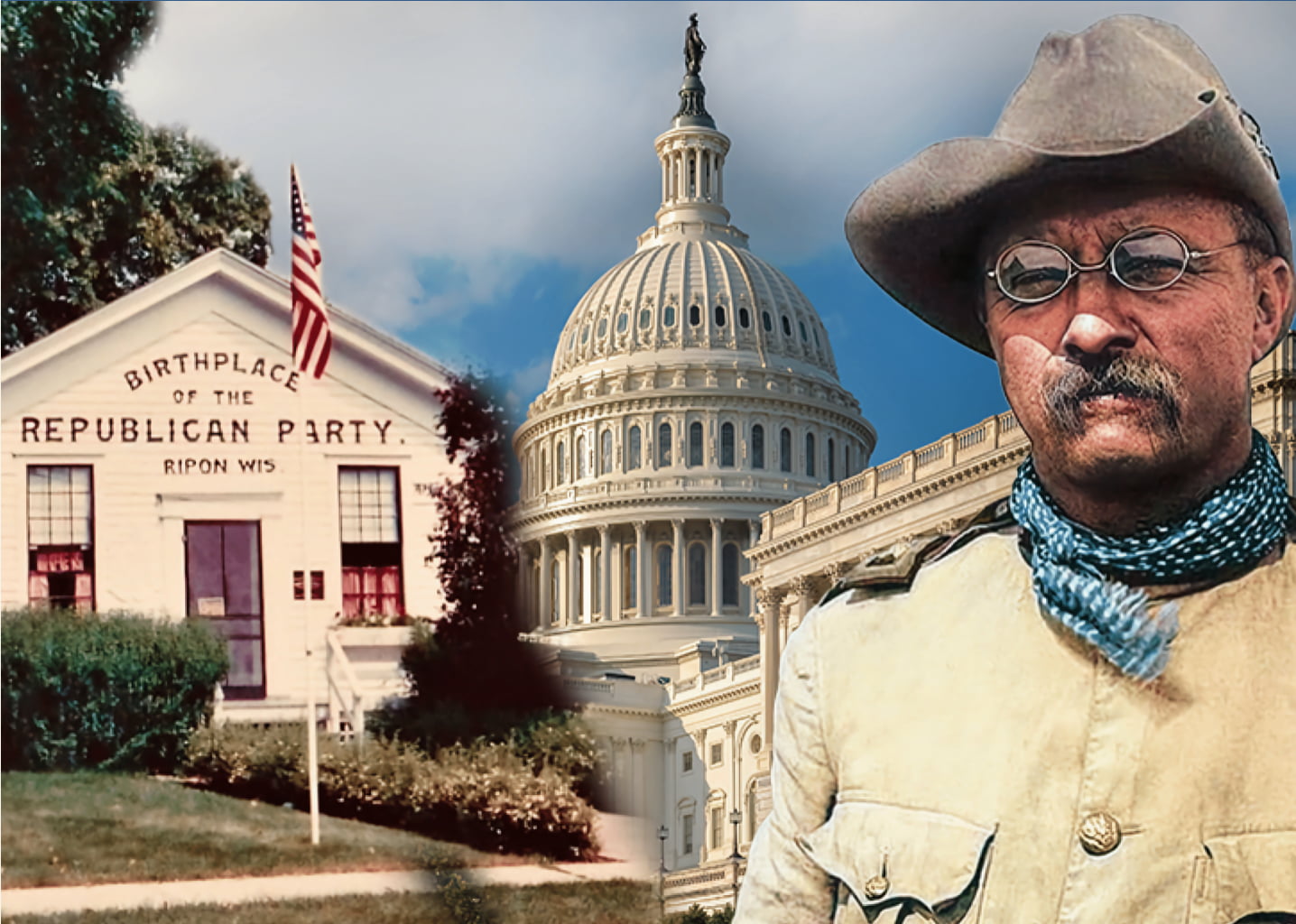
The Ripon Society is a public policy organization that was founded in 1962 and takes its name from the town where the Republican Party was born in 1854 – Ripon, Wisconsin. One of the main goals of The Ripon Society is to promote the ideas and principles that have made America great and contributed to the GOP’s success. These ideas include keeping our nation secure, keeping taxes low and having a federal government that is smaller, smarter and more accountable to the people.