

“We’re not going to compromise our principles.”
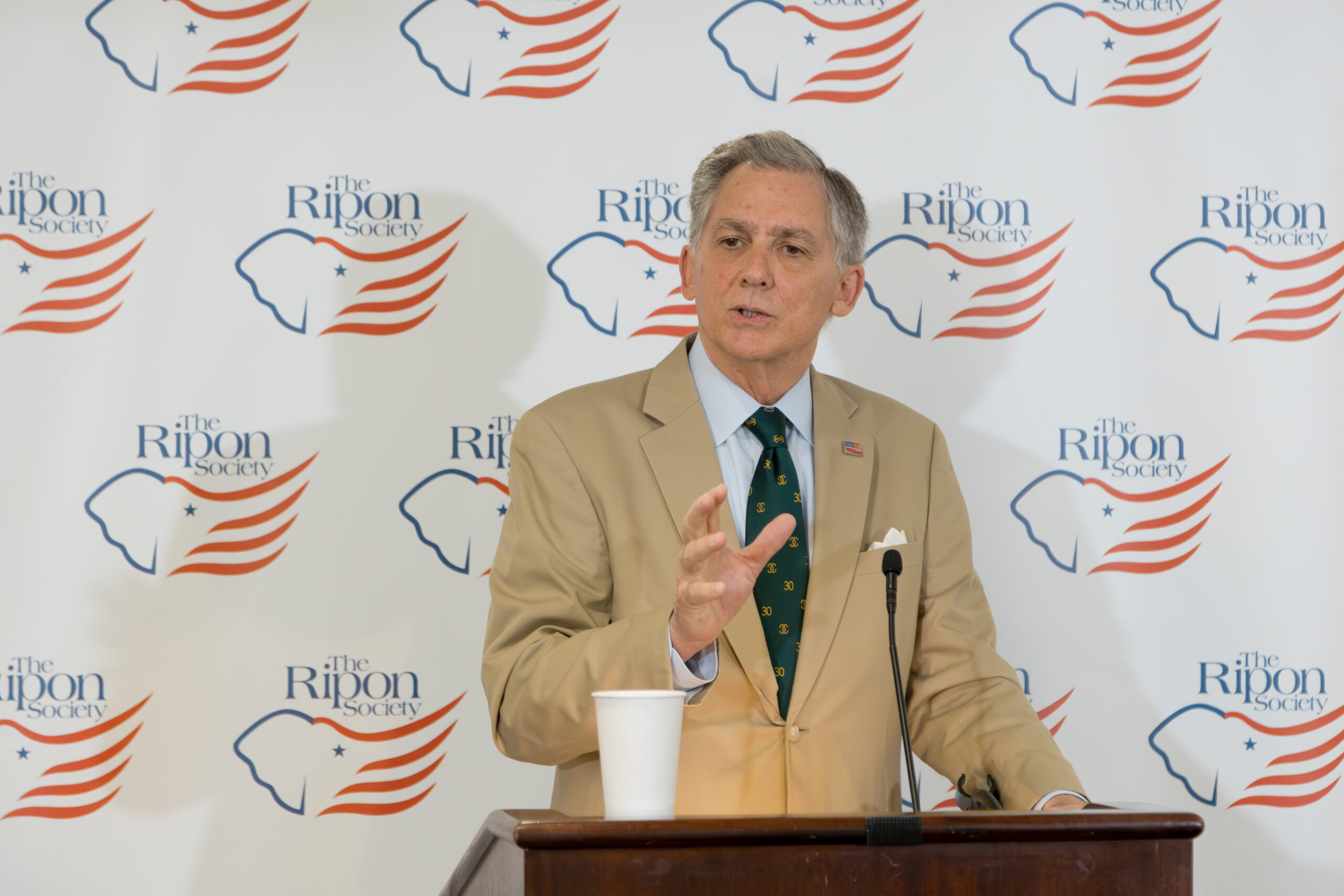
WASHINGTON, DC – House Financial Services Committee Chairman French Hill (AR-02) discussed the priorities and progress of the 119th Congress at a breakfast discussion held by the Ripon Society yesterday morning, highlighting landmark legislation on housing, digital assets, and capital formation — and outlining the committee’s path to the finish line before the end of the term.
Chairman Hill opened by tracing the roots of America’s financial system to Alexander Hamilton’s dual legacy of commercial banking and capital markets — the foundation, he argued, that continues to define the committee’s mission today.
“We understand the importance of interstate commerce and international commerce and America’s place in the world by the work we do in commercial and investment banking and its related issues like housing, and housing finance. It’s 20% of our economy – residential construction’s a big part of our economy. It’s why we put so much emphasis on and thinking about housing in this Congress.”
The Chairman, a former staffer on the Senate Banking Committee’s Housing Subcommittee under Sen. John Tower (R-TX), reflected on his governing philosophy: build coalitions around sound policy and get to yes.
“If this is an important enough policy to change the direction of the United States, a particular policy, then we’re going to get the yes. We’re not going to compromise our principles.”
On legislative accomplishments, Hill pointed to several major bills the committee has moved through the House in the 119th Congress with strong bipartisan support: the CLARITY Act, the digital asset market structure bill, which passed with 78 votes including Democratic support and fulfills a commitment he made to the President; the Housing for the 21st Century Act, which passed with 390 votes — every House Democrat voting for a Republican-authored housing package; the INVEST Act, a capital formation bill passed with 302 votes; and the Main Street Capital Access Act, which he expressed hope would reach the floor soon as the centerpiece of his goal to “make community banking great again.”
On housing, Hill acknowledged the math challenge of reconciling the House bill with the version passed by the Senate, noting that differences over a proposed new HUD program and other provisions put several House members in the “no” column on the Senate text. The committee moved a carefully targeted amendment to the Senate bill, preserving the coalition while making the minimum changes necessary to hold the House majority.
“This is a win for the American people, for the homebuilding industry, for people trying to build their first home, for people who want to cut costs, who want to cut bureaucracy, who want to beat local zoning commissions,” Hill said. “The President has asked the Senate to pass our bill, and he’ll sign it.”
On digital assets, Hill praised the Senate’s work under Senators Tim Scott (SC) and John Boozman (AR) to move the CLARITY Act forward, noting that Senate Banking and Senate Agriculture committees are working to reconcile their respective titles into a unified bill. He expressed confidence the bill could reach the President’s desk before the August recess.
Hill also offered an endorsement of Kevin Warsh as the incoming Federal Reserve Chair, describing him as well-prepared for the role and likely to bring a narrower, more disciplined focus to the Fed’s core mission of price stability — including closer attention to the Fed’s balance sheet and the role of its regional reserve banks.
“He comes at the job at the perfect time with perfect background, and he knows quite clearly what needs to happen. I’m proud to see the Senate confirm him now.”
On the question of building bipartisan coalitions with a narrow House majority, Hill offered practical counsel: start with good policy, break legislation into small pieces rather than sweeping omnibus packages, find Democratic co-sponsors on individual bills, and ensure members develop Senate companions early in the process.
“Be principled, policy-oriented, break it down into small pieces, find bipartisan partners,” he said.
The Ripon Society is a public policy organization that was founded in 1962 and takes its name from the town where the Republican Party was born in 1854 – Ripon, Wisconsin. One of the main goals of The Ripon Society is to promote the ideas and principles that have made America great and contributed to the GOP’s success. These ideas include keeping our nation secure, keeping taxes low and having a federal government that is smaller, smarter and more accountable to the people.