

“We need an all-of-America approach on this.”
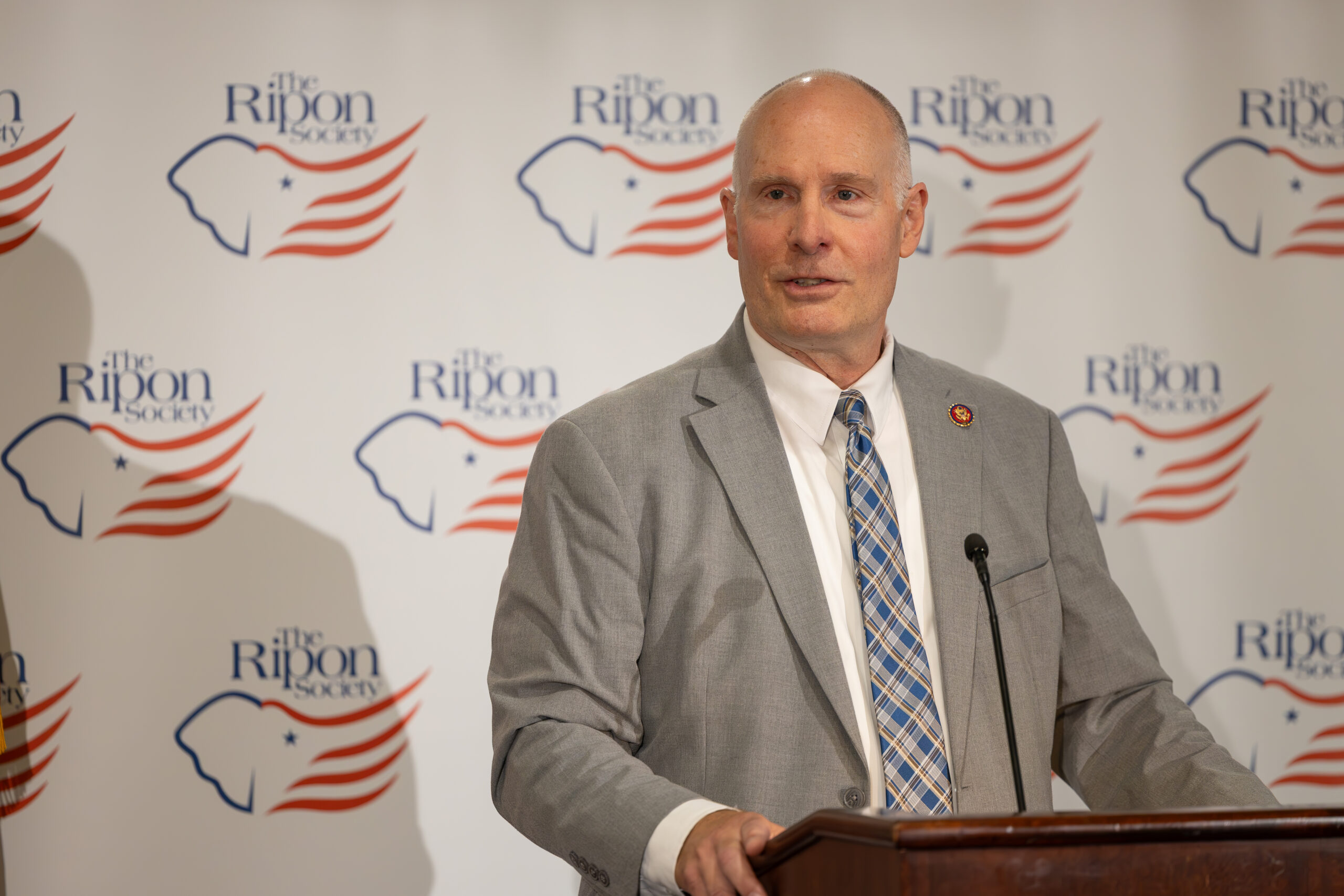
WASHINGTON, DC – As the Chinese Communist government continues to pose a serious threat to American interests at home and abroad, The Ripon Society hosted a discussion with The House Select Committee on China Chairman U.S. Rep. John Moolenaar (MI-02) yesterday morning.
Reflecting on the committee’s origins, Chairman Moolenaar credited the panel’s creation to the foresight of former Speaker Kevin McCarthy in his opening remarks.
“I look at our select committee as one of the most important legacies of Kevin McCarthy. He said there were two things that kept him up at night. One was the national debt, and then there was this relationship with China and that really led to a task force and now the Select Committee.”
Addressing a common misconception about the committee’s work, Chairman Moolenaar was careful to draw a distinction between the Chinese people and their government.
“Often, we will get asked these questions about, ‘are you anti-China?’ And the answer is no. We love the Chinese people, but it’s the Chinese Communist Party that is oppressing the Chinese people and also creating problems around the world with their neighbors and other areas.”
He went on to frame this distinction in terms of a broader clash of values.
“At the end of the day, if you say what makes China different – and you could say that about a number of our foreign entities of concern – the difference is it’s a very different world view and it really comes down to human dignity. … The people really don’t have rights. It’s really the Chinese Communist Party that dominates everything.”
The Michigan Congressman then warned that the scope of the challenge extends well beyond China’s borders.
“When you realize the dominance they have in technology and information and the ability to influence, don’t be surprised when this isn’t just China. It’s not just China’s neighbors. It’s the entire world and the expanding and spreading influence of this kind of ideology. We need an all-of-America approach on this.”
Chairman Moolenaar also spoke about how the Committee is fulfilling its mandate to advance policies that respond to threats from China.
“Now we’re in a phase where our goal of our committee is really to be a force multiplier for authorizing committees… I feel my role is to be a team player and work with the different authorizing committees and make sure we’re getting them the best opportunity to advance legislation that will be in our national interest in winning this competition with China.”
Turning to current legislative priorities, he listed several sectors of concern to the people he represents.
“When I talk to my constituents, the number one thing they’re worried about is China buying up farmland or China buying land near military bases. Look at areas of the auto industry and Chinese vehicles, robots, pharmaceuticals, critical minerals – all these areas where we have a dependence and a vulnerability with respect to China.”
He went on to describe what he called China’s recurring economic “playbook,” warning of the risks posed by connected devices in particular.
“When you think of robots, especially humanoid robots, the idea of having these machines in people’s homes and workplaces like the vehicles are – we call them rolling data collection devices. We are concerned about the drones because of the information they could divulge.”
“We’re in a new era, but the challenge is you don’t want to over-regulate. There’s got to be a way that we can continue to trade some with China, but we have got to be strategic about it.”
To watch Chairman Moolenaar’s remarks to The Ripon Society yesterday, please click the link below:
The Ripon Society is a public policy organization that was founded in 1962 and takes its name from the town where the Republican Party was born in 1854 – Ripon, Wisconsin. One of the main goals of The Ripon Society is to promote the ideas and principles that have made America great and contributed to the GOP’s success. These ideas include keeping our nation secure, keeping taxes low and having a federal government that is smaller, smarter and more accountable to the people.