


Winston & Miller Assess the Political Landscape for Republicans Heading into the Midterms
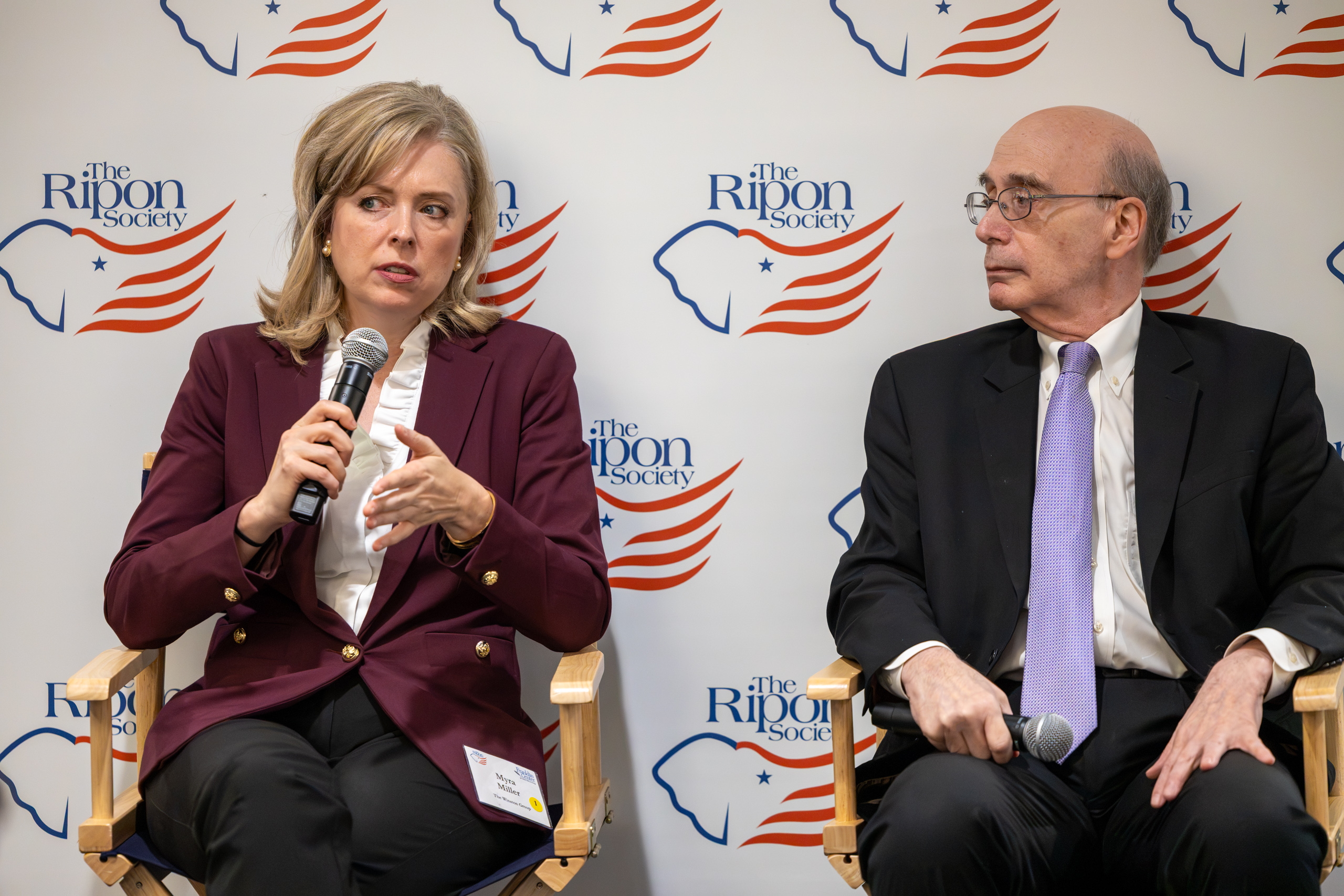
WASHINGTON, DC – With less than four weeks to go before the 2026 midterm elections, veteran GOP pollsters David Winston and Myra Miller of The Winston Group told a luncheon meeting of The Ripon Society on Wednesday that the party’s prospects of holding its House and Senate majorities will turn on two factors — whether Republicans can convince voters they are making progress on the cost of living, and whether they can win back the independent voters who powered their 2024 victory.
“Republicans had one job coming out of that election, and that was fixing the economy,” Miller said. “Given the way that things have evolved, that’s why we’re seeing challenges today.”
The challenges are occurring in a political environment that has been historically difficult for the party holding the White House. Since World War II, the president’s party has lost House seats in 18 of 20 midterm elections, with the only exceptions coming in 1998 and 2002. The average loss over that period is roughly 26 seats, the same number Republicans lost in 1982, when unemployment hit 10 percent during Ronald Reagan’s first term. With Republicans defending majorities in both chambers, even a typical midterm swing could cost the GOP control of the House.
In her remarks, Miller pointed to a shift in the 2024 electorate that, she said, has received little attention in the media. The number of Democrats fell from 37 percent of voters in 2020 to 31 percent in 2024, while the number of independents rose from 27 percent to 34 percent. She also pointed out that independents outnumbered both Republicans and Democrats in five of the seven presidential battleground states.
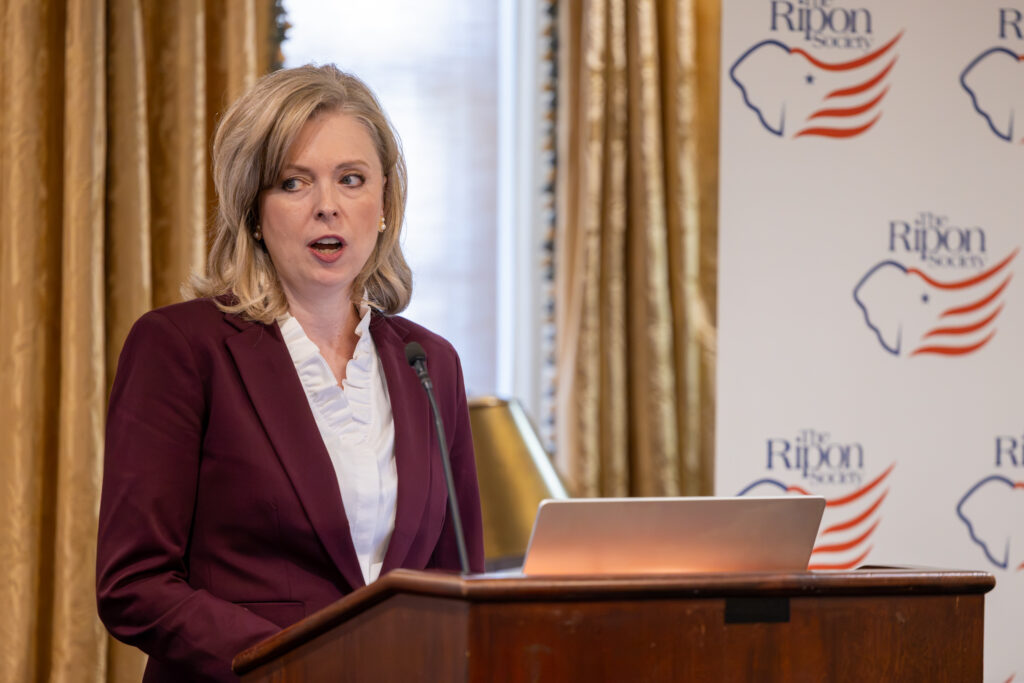
“Independents are going to play a very significant role,” Miller said.
And as it stands, she added, voters are not happy. She noted that 30 percent of voters believe the country is headed in the right direction, while 61 percent say it is on the wrong track. She further noted that 73 percent of voters say the cost of living is rising faster than their incomes.
Winston agreed.
Using data from the Bureau of Labor Statistics, he showed that prices outpaced wages by 4.8 percent during President Biden’s term. That gap was cut to 2.7 percent early in President Trump’s second term, before the conflict with Iran drove it back above 5 percent. It currently stands at 4.1 percent.
“People are way unhappy, to say the least,” Winston stated.
Noting that gas prices have risen 55 percent since January, he added: “It’s one thing if it had been a couple of months, but now people are really trying to figure out how they manage this. This is no longer Biden’s economy. It’s President Trump’s, because it’s his policy driving it.”
The shift is showing up in the numbers.
After the 2024 election, Republicans held a 12-point advantage on which party voters trusted to handle inflation and an 11-point advantage on the economy. Today, those numbers are flipped, with the GOP trailing by 12 points on inflation and seven on the economy.

“The question that everybody’s been trying to work through is, can Republicans sell the tax bill?” Winston said.
He argued the party has missed an opportunity in this regard. While the provisions eliminating taxes on tips, overtime and Social Security benefits reached a combined 71.5 million filers, Winston said extending the larger standard deduction affected 127 million, a number that will grow to roughly 143 million. For a married couple, that meant $13,400 in income that would otherwise have become taxable.
“Nobody did an effective job in terms of being able to express that to those people,” he said. “That conversation never happened.”
On the Senate map, Winston identified 11 competitive races, including four toss-ups in states President Trump carried by 11 to 14 points. He said that has implications for House races, as well.
“If you’re in a district where it’s 13 points or less, you may be in a toss-up district and not aware of it,” he warned. “This is where surprises happen.”
In the House, Winston said Democrats hold an eight-point lead on the generic ballot, well beyond the three-to-four-point threshold he typically considers to be a “toss up or a little bit of the danger range.” Rather than using the 2024 presidential results as a benchmark, he looked at the 2020 race, noting that President Biden carried 220 congressional districts.
“That’s enough seats to potentially win,” he said of the Democrats’ opportunity.
Winston also stressed the importance of turnout, noting that Republicans won the national House vote by 6.7 points in 2010 with no party identification advantage, but by only 2.7 points in 2022 despite a three-point edge in party ID.
“Turning out the base is a really good thing,” he said. “But the base isn’t large enough.”
In addition to running their strategic planning and survey research firm, Winston and Miller also host their own weekly podcast, called Discussion Points, which can be watched on YouTube by clicking here.
To listen to their remarks before The Ripon Society on Wednesday afternoon, please click the link below:
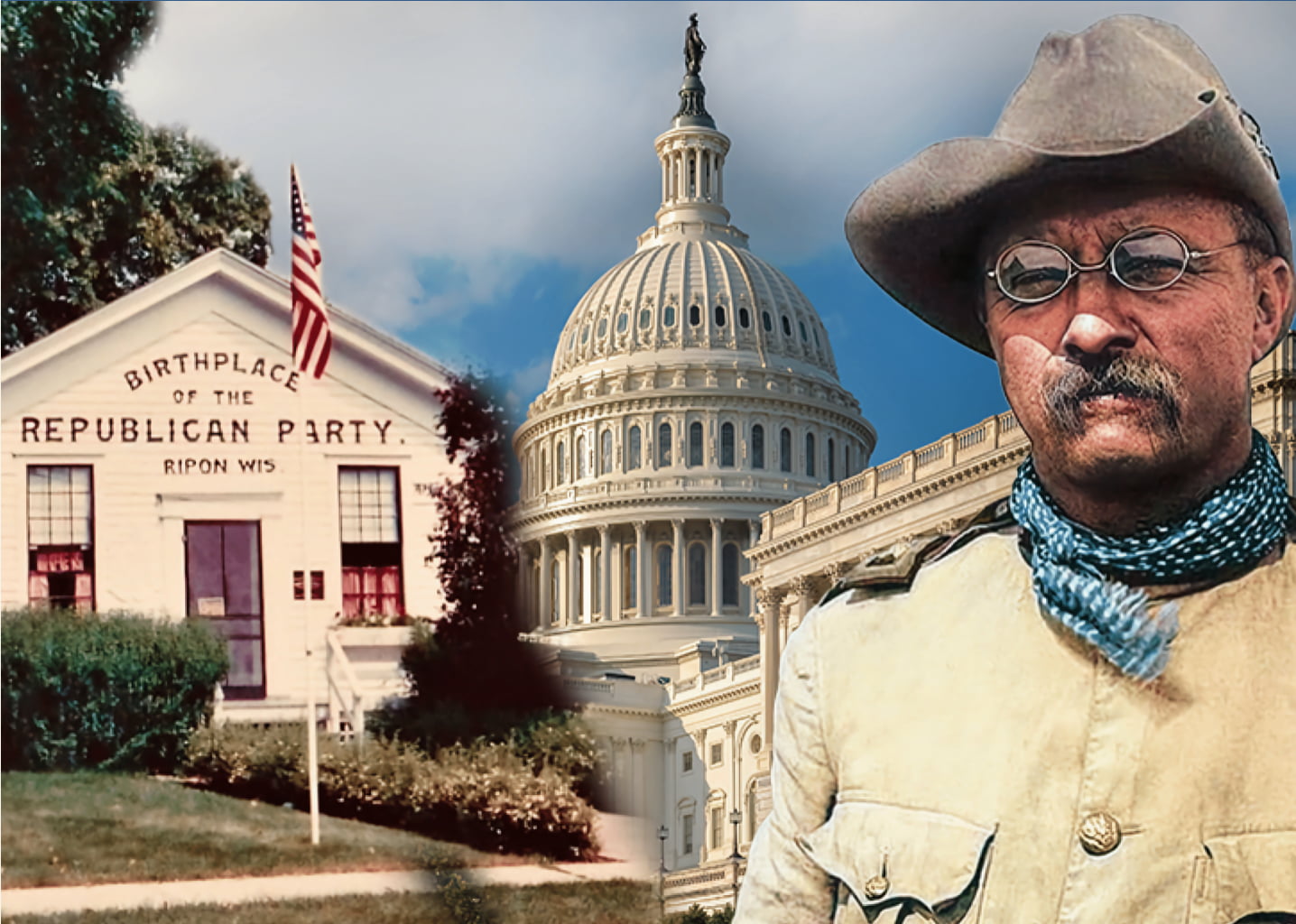
The Ripon Society is a public policy organization that was founded in 1962 and takes its name from the town where the Republican Party was born in 1854 – Ripon, Wisconsin. One of the main goals of The Ripon Society is to promote the ideas and principles that have made America great and contributed to the GOP’s success. These ideas include keeping our nation secure, keeping taxes low and having a federal government that is smaller, smarter and more accountable to the people.