





America’s nuclear arsenal is aging — and is ill-fit for today’s challenges. Even once the nuclear modernization program currently underway is complete sometime in the 2040s, America’s arsenal will not be sufficient for the current threat environment, or for potential threats of the 21st century.
The United States has not built a new, fully constituted nuclear weapon since 1989. Many of the warheads in the arsenal are decades older. Beyond the warheads, the platforms designed to deliver the warheads are also out of date, and in many cases, well past their lifespan.
The B-52 bomber was first fielded when Dwight Eisenhower was president. The Minuteman III ballistic missile was supposed to retire when Ronald Reagan was president. And the Ohio-class ballistic missile submarines will be operating well into the 2030s and 2040s — years after the end of their program life.
The United States has not built a new, fully constituted nuclear weapon since 1989. Many of the warheads in the arsenal are decades older.
While the United States is modernizing its entire arsenal, this modernization program is far behind schedule. The Sentinel ballistic missile — meant to replace the antiquated Minuteman III — is over budget and behind schedule, causing the Air Force to state that some Minutemans will be operating until 2050. The Columbia-class submarine program, meant to replace the current ballistic missile submarine fleet, are also on the cusp of being late.
Most worryingly, the National Nuclear Security Administration, the government agency that builds nuclear weapons, is far behind schedule in virtually every aspect of the modernization process. To take one example, NNSA was originally meant to be building 80 plutonium pits —the fissile core at the heart of a nuclear weapon — a year by 2026. According to the NNSA, it will not hit that mark until 2035 — nine years behind schedule.
This is all in sharp contrast to the Cold War, when the United States built literally thousands of nuclear weapons a year. Indeed, the United States broke ground at the Rocky Flats plutonium production facility in 1951. Eighteen months later, the first plutonium pit rolled off the assembly line. In contrast, the United States built its first new, diamond stamped plutonium pit in 2024 — 14 years after the 2010 nuclear modernization program began.
Compare this with what America’s adversaries are doing with their nuclear arsenals. Russia has roughly 2,000 non-strategic nuclear weapons operationally deployed and capable of striking America’s allies in Europe. In contrast, the United States has less than 10 percent of that number deployed in Europe as part of NATO’s deterrent — and fewer than that operationally ready at America’s bases in the U.S. homeland.
Similarly, China is the fastest growing nuclear power on the planet and is fielding dual-capable ballistic and cruise missiles that can target American ships and bases from Japan to Guam to Australia with nuclear or conventional weapons. They are, in other words, fielding an arsenal that is optimized to fight a theater nuclear war.
And they are doing this at a time when the United States maintains no non-strategic nuclear weapons in the entire Pacific theater — having removed all its nuclear weapons from South Korea at the end of the Cold War and retiring the nuclear-variant of the Tomahawk cruise missile under President Obama. Indeed, the Department of Defense believes that by 2030, China will have upwards of 1,000 nuclear weapons (a 500 percent increase from 2020) and 1,500 nuclear weapons by 2035 — the same number of strategic nuclear weapons fielded by the United States and Russia today — with no signs of stopping warhead production or deployment.
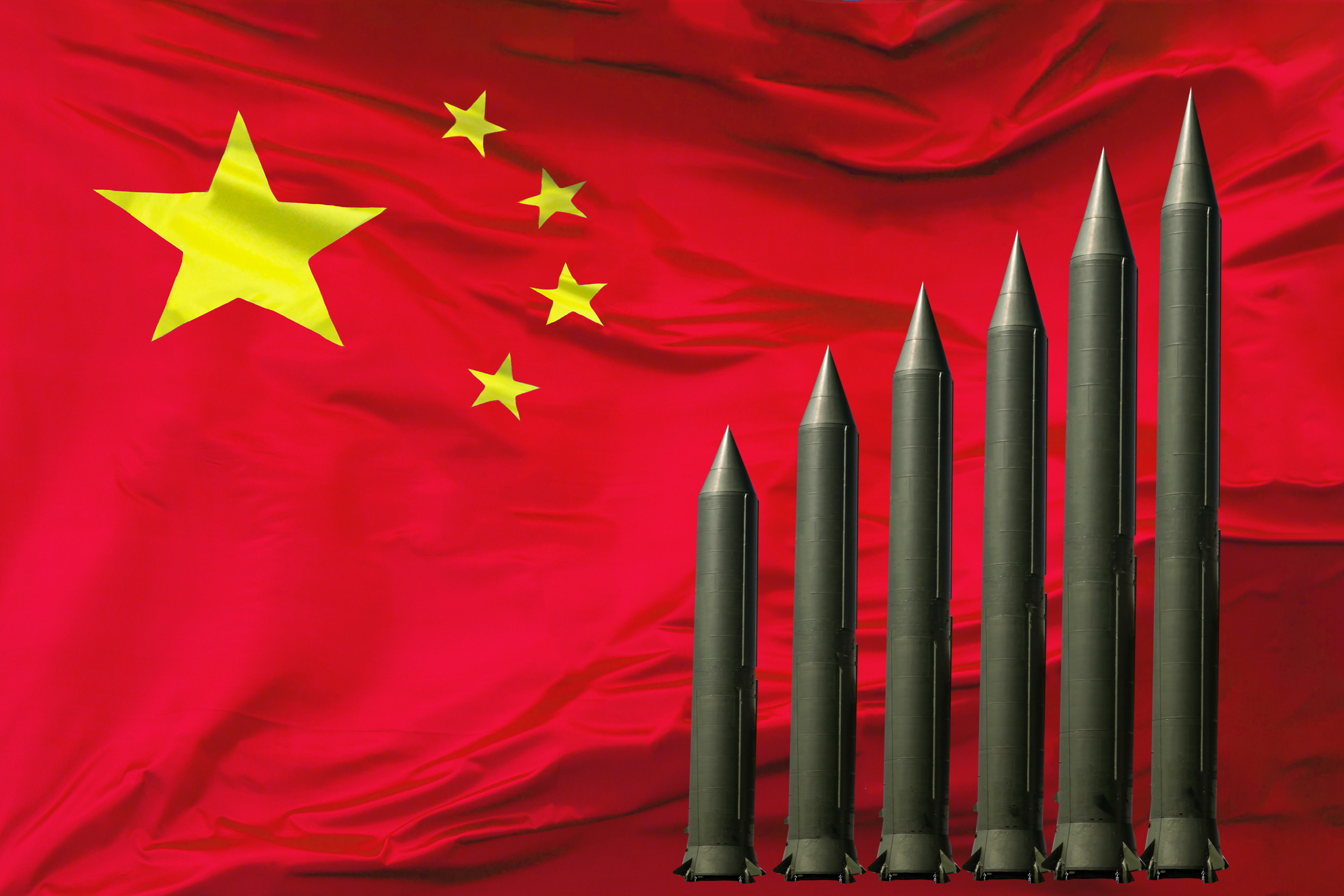
China is the fastest growing nuclear power on the planet and is fielding dual-capable ballistic and cruise missiles that can target American ships and bases from Japan to Guam to Australia with nuclear or conventional weapons.
At the same time, North Korea continues to produce ever more reliable and mature missiles and ever more nuclear weapons. In December 2024, then Deputy National Security Advisor Jon Finer noted that Pakistan, a nuclear-weapon state, is building intercontinental ballistic missiles — and had yet to provide a reason as to why they need nuclear-capable missiles that can strike the American homeland. Finally, the regime in Iran is for all intents and purposes a nuclear threshold state, with enough highly-enriched uranium to produce fissile material for a number of weapons within weeks.
What then does the United States need to do, in light of all this?
First, President Trump must make nuclear modernization a priority — and give guidance to the Department of Defense and Department of Energy to build the nuclear arsenal of the 21st century.
Second, the Department of Energy and the NNSA Administrator must put the nuclear weapons complex on a wartime footing in order to accelerate the timelines to produce new nuclear warheads at scale.
Third, the President and the requisite cabinet secretaries should waive requisite National Environmental Protection Act and workplace safety regulations in order to ensure that the United States can build the warheads, missiles, bombers, and submarines necessary to ensure that the American arsenal remains credible.
Finally, the Department of Defense must identify specific force requirements — quantity and desired capabilities — to build the arsenal that will protect America for the better part of the 21st century.
Nuclear weapons are the cornerstone and ultimate guarantor of American security. We must ensure that they remain credible to our adversaries, given our adversaries’ increasing reliance on their own nuclear weapons.
Robert Peters is a Senior Research Fellow for Strategic Deterrence in The Heritage Foundation’s Allison Center for National Security.