



If there is one thing Republicans and Democrats agree upon, it’s that they don’t love data centers. According to a poll conducted by Morning Consult in November of last year, 47 percent of Republicans and 41 percent of Democrats want to ban further construction of data centers in their communities.
The sentiment is hardening against data center construction. Only 34 percent of Democrats and 43 percent of Republicans wanted to ban such construction the month before.
The reasons why Americans don’t want data centers built in their neighborhoods vary by community. Some don’t want the new builds due to concerns over water use. Others don’t want to see their electricity bills go up.
There are other reasons at play. Chief among those is a general concern about where all of this technology is going. Modernity is coming fast upon us, and nobody really knows for sure how it is going to end up.
Most of the anger directed at data centers is not being manufactured by some left-wing conspiracy. Instead, it is being driven by a very real fear about the future shared by Democrats and Republicans alike.
The advent of artificial intelligence raises many questions. How will it impact how we live our lives in the future? Will it destroy white and blue collar jobs? Is AI a tool that we can control or a science fiction monster that will dispense with the silly concerns of the human race? Will AI do our bidding or will humanity become a slave to the machines among us?
Among the technological elite, opinions about what AI will do to us vary. Elon Musk has opined that AI will have such a profoundly positive impact on society that most humans won’t have to work anywhere and somewhere in the distant future, the whole idea of money will become extinct. Dario Amodei, the founder of Anthropic, warns that our social structures are not ready for the abrupt change that AI will bring and that there is about a 25 percent chance of catastrophic consequences. Jensen Huang, the CEO of the world’s largest chip maker Nvidia, believes that everybody should chill out, that end is not nigh, and that the hype is far more panicked than the reality of implementation.
American voters, according to polls, have a healthy skepticism about AI implementation. As Fox News reported, “The latest Fox News poll finds 6 in 10 registered voters feel the use of artificial intelligence is moving too quickly in the United States, while another 3 in 10 feels it’s progressing at the right pace. Just 6 percent say it’s moving too slowly….Although most think the use of AI is going too fast, there are some differences along demographic lines: Women, White voters, those ages 65+, and Democrats are more likely to say things are moving too fast compared to men, nonwhite voters, those under age 30, and Republicans.”
AI implementation may or may not be as widespread as the experts believe, it is often an excuse for multi-national conglomerates and big tech firms to lay off workers. Amazon just recently announced it was laying off 16,000 workers after making a similar announcement last fall that it was going to lay off 14,000 workers, and it blamed AI for the layoffs. Pinterest said it will lay off 15 percent of its workforce to spend more resources on AI focused jobs. HP said it would lay off about 6,000 workers in anticipation of AI implementation.
All of these announcements don’t go unnoticed by the American voters. And the natural reaction among some will be to go after the data centers.
Peter Huntsman, in a Wall Street Journal op-ed, complaining about the populist backlash said, “Data center moratoriums are the new fracking bans. Environmental nonprofits are deploying the same playbook against data centers that they have used against oil, gas, nuclear and chemical companies over the past decade, and many business leaders are again tempted to stay silent.”
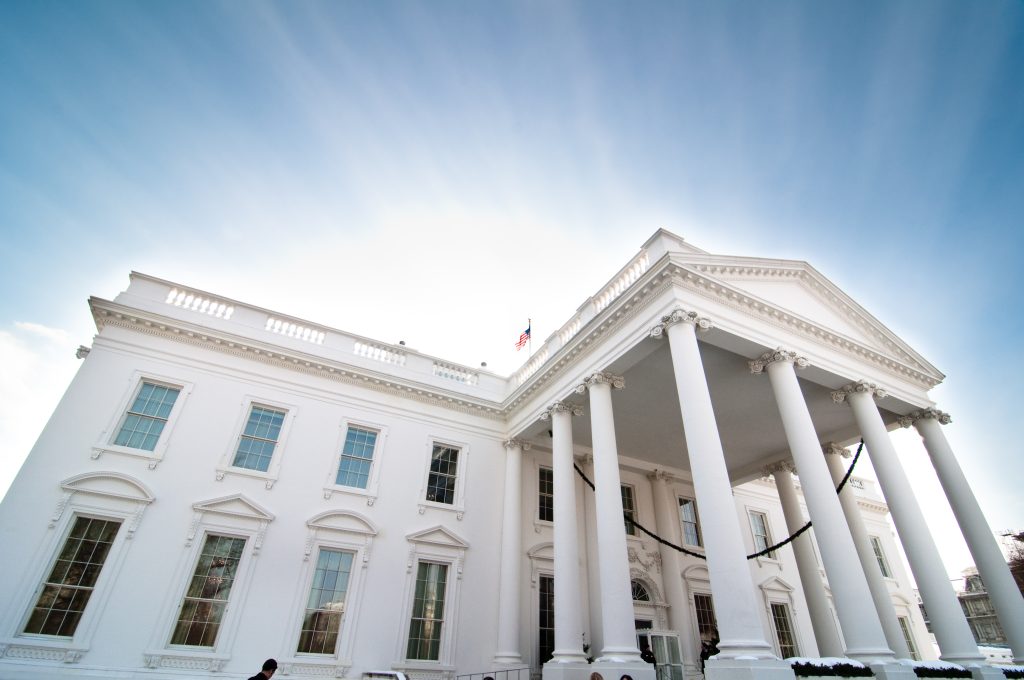
For Mr. Trump, the stakes are very high indeed. If the polling is to be believed, the American people are not only skeptical about AI, they are also far more skeptical about the President’s economic stewardship.
I understand where Huntsman is coming from, given his position as the CEO of an important chemical manufacturing company. But most of the anger directed at data centers is not being manufactured by some left-wing conspiracy. Instead, it is being driven by a very real fear about the future shared by Democrats and Republicans alike.
The President and Congressional Republicans are going all in on an AI future. They have bet their chips (so to speak) that the jobs losses that are already happening from the widespread adaptation of the new technologies will be more than compensated by better jobs and a higher quality of life for the American people.
For Mr. Trump, the stakes are very high indeed. If the polling is to be believed, the American people are not only skeptical about AI, they are also far more skeptical about the President’s economic stewardship. This is how the AP reported it: “About 4 in 10 voters in the Fox News poll said Trump’s economic policies have “hurt” them personally, while about the same share said the policies haven’t made a difference. Only about 2 in 10 say the president’s economic path has benefitted them — and looking ahead, 45 percent of voters say they expect the economy will “get worse” in the next year.”
The White House and Congressional Republicans have to do a better job of communicating with voters about their AI proposals. They also have to do a better job of listening to what the voters are saying about the future economy and their place in it. There is widespread unease that the technologies are moving too fast and that workers are being sacrificed too quickly in service of a tech elite that already makes trillions of dollars.
There is a saying in business that when you market to the masses, you can eat with the classes. The same holds for politicians. When you have a message that works for working class Americans, you win elections.
My advice: Slow down on the AI embrace and make sure workers are protected. Communicate with the voters and, just as importantly, listen to their concerns and worries. And don’t be afraid to be a little populist now and then. The future is a little scary. Give the voters a sense that you are on their side.
John Feehery is Partner of EFB Advocacy, a boutique lobbying and strategic advocacy firm located right next to historic Eastern Market on Capitol Hill. He is a frequent commentator on the political landscape, widely quoted around the country and often seen on such television programs as CNN’s The Situation Room, MSNBC’s Hardball, and Bloomberg Television’s Money and Politics. He is also a columnist for The Hill.