





In 2018, President Trump proclaimed trade wars “are good and easy to win.” Now, six months into the President’s latest trade war, the results have proven to be anything but. While the President boasts about the billions in revenue the tariffs are generating and trade “deals” he is brokering, a closer look shows it is American firms and consumers ultimately getting fleeced.
The Trump administration has cited numerous goals for the tariffs, goals often in contradiction with each other. Some days, the tariffs are either a “negotiating tool,” in which case they are not intended to remain in effect for very long; other times, the tariffs are the end in themselves. Trump has frequently alleged that the tariffs will restore American manufacturing, fix the debt, and reduce the “trade deficit” — a purported “national security” threat to the U.S.
In all these cases, Trump is overpromising and underdelivering.
While the President boasts about the billions in revenue the tariffs are generating and trade “deals” he is brokering, a closer look shows it is American firms and consumers ultimately getting fleeced.
Let’s start with the claim that tariffs will revive U.S. manufacturing. More than half of imports are capital goods and intermediate inputs — things used by businesses to produce final goods that we buy, from smartphones to cars. As tariffs rise, the costs of production for those firms also goes up. The Federal Reserve looked at the impacts of the tariffs in Trump’s first term and concluded that manufacturing output and employment actually declined because of them, contrary to what was promised. A United States International Trade Commission report studying the steel and aluminum tariffs reached similar conclusions.
On revenue, while it is true that tariffs can reduce the debt, they are an incredibly inefficient way to do so. Raise the tariff too much, and imports will collapse, reducing their revenue-raising potential. Indeed, the Tax Foundation finds that if the reciprocal tariff rate on China goes into effect, which would increase the tariff by 115 percentage points, this would reduce imports of tariffed-goods from China to zero. But consumers would not be spared the price impacts: their alternatives would be either purchasing higher-price domestic goods or import tariffed goods from elsewhere, like Vietnam. Trump’s $150 billion in tariff revenue this year might look impressive, but it is a poor indicator of what we should expect going forward.
Nor should we have much confidence that these tariffs would reduce the trade deficit. Because tariffs raise production costs, they affect how much firms can produce and export abroad. As it turns out, tariffing imports also hurt exports. Factor in retaliatory tariffs from Canada and China (and potentially more down the road) and exports will be hurt even more. If Trump wants to support manufacturing by expanding their export markets, tariffs are a poor way of going about it.
A Federal Reserve survey fielded in May found that 45 percent of firms had reported passing along some of the tariff increases to consumers, with a third indicating they had passed all the increase onto consumers.
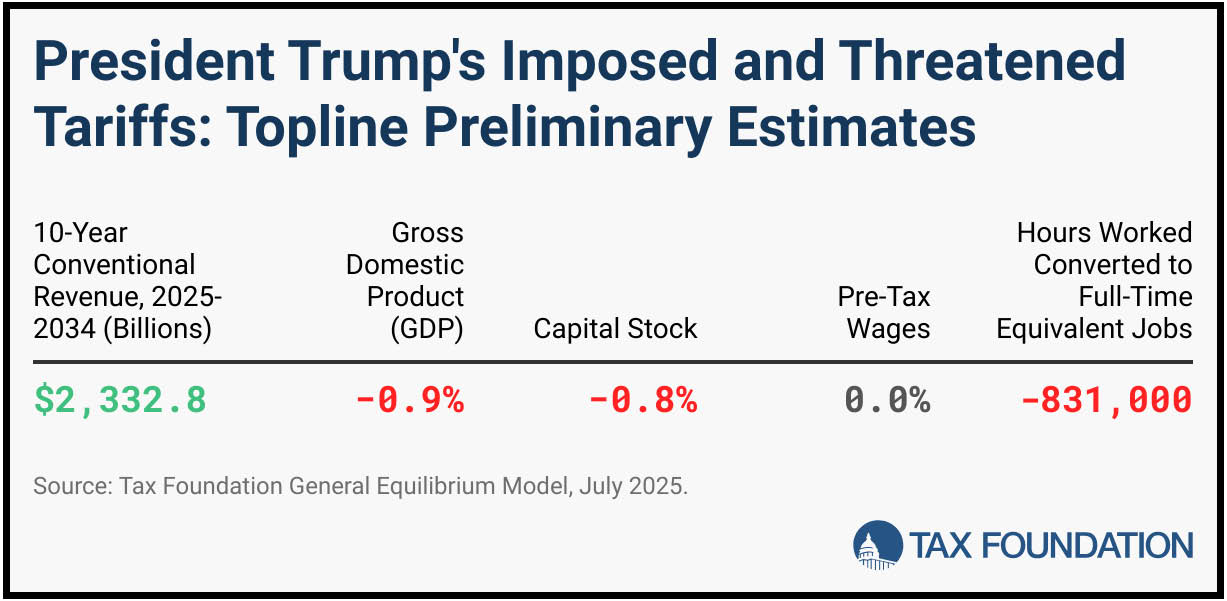
Finally, we should look at how tariffs will affect prices. A Federal Reserve survey fielded in May found that 45 percent of firms had reported passing along some of the tariff increases to consumers, with a third indicating they had passed all the increase onto consumers. While some firms report absorbing tariffs, this could change with all of the reciprocal tariffs now in effect. Firms who operate on a contract basis might also experience lag time when they increase their prices. Right now, only a few products, such as audio equipment and certain foods, are showing significant price hikes. However, this does not imply that the tariffs are not currently having negative economic effects. If firms must spend more money to pay the tariffs, that’s less money they have to put toward investments or job creation. This is why the Tax Foundation finds that on the whole tariffs will reduce economic growth and employment. Still, we should probably brace for higher prices going forward.
So far, it does not appear that any of the trade “deals” that Trump has announced will offer Americans much relief from the tariffs. While it would be ideal for countries in any arrangement to agree to reduce their tariffs to zero (free trade still benefits all parties), President Trump seems to be negotiating to higher tariffs on imports in exchange for purchase commitments and investment promises. The proposed EU deal, for instance, would increase the tariff on their imports to 15 percent, in exchange for the EU agreeing to buy more U.S. energy exports and invest in the U.S. President Trump negotiated a similar agreement with China in 2020, where they agreed to purchase more of our agriculture exports for two years. Unfortunately, their purchases fell well below their commitments. We should expect a similar result from the EU deal as their purchase promises are well above their actually energy needs.
Negotiating trade deals is a worthwhile goal, but those deals should move us in the direction of increasing trade among both countries by reducing tariffs and expanding market access. Sadly, the President’s approach is moving us in the opposite direction.
Alex Durante is a Senior Economist at the Tax Foundation, where he works on federal tax policy and macroeconomic model development.