



The Trump Administration and Republican Congress appear to be committed to a large increase in military spending. While we do not yet have a detailed picture of the Administration’s long-term defense budget plans, the Administration’s so-called “skinny” budget, released in early May, includes a proposed defense budget for 2026 that would top $1 trillion — marking a 13 percent jump from this year’s level. At the same time, the Administration has proposed to dramatically reduce the amount of funding allocated to the international affairs budget, cutting it by some 85 percent in 2026. From a national security perspective, neither of these proposals appears prudent. Indeed, if implemented, these very different treatments of U.S. “hard power” and “soft power” are more likely to weaken, than strengthen, America’s security.
At some $900 billion, the recently enacted 2025 U.S. defense budget is already 14 percent higher (in “real” inflation-adjusted terms) than it was in 1985 at the height of the Cold War. And under the Administration’s request, in 2026 the U.S. defense budget would reach its highest peacetime level ever. Such a significant increase in military spending would represent a wasteful and — worse — counterproductive, allocation of resources.
Under the Administration’s request, in 2026 the U.S. defense budget would reach its highest peacetime level ever.
In reality, current levels of military spending are more than adequate to meet America’s key national security requirements and significantly exceed what would be needed were the United States to adopt a more restrained approach to its security. The United States already spends far more on its military than does any other country, including China — our closest rival. According to the most authoritative recent estimate, even after adjusting for various components of military spending left out of China’s (as well as, in some cases, the United States’) official defense budget and other factors, the United States annually spends roughly three times more on its military than does China.
This is far more favorable math than during the Cold War, when the United States and its NATO allies combined were estimated to spend only modestly more on their militaries than the Soviet Union and its Warsaw Pact allies. Moreover, as a share of their economies, at 3.2 percent of GDP, U.S. military spending already far exceeds what U.S. allies and friends in both Europe and East Asia — the countries the U.S. military is largely intended to help defend — spend on their own militaries (Germany and Japan, for example, allocate 1.5 percent and 1.2 percent, respectively, of their economies to defense), or what China spends (about 1.7 percent of GDP).
But worse than simply being unnecessary, a large increase in military spending could have severely negative consequences for U.S. security over the long run. This is because when combined with the large tax cuts included in the reconciliation bill supported by the Administration and Republican Congress — which is only very partially paid for through cuts in non-defense programs like Medicaid — such an increase will accelerate and exacerbate the growth in the federal debt, already projected to reach 166 percent of GDP by 2054. And it is difficult to imagine a weaker and more fragile economic, financial, and budgetary foundation upon which to rest the country’s long-term security — including, ultimately, its military capabilities.
At the same time the Trump Administration is proposing a large increase in military spending, it has proposed draconian cuts to the international affairs budget. Including proposed rescissions of previously appropriated funds, under the Administration’s request, the budget for the State Department and other international affairs programs would be cut by 85 percent in 2026, to $9.4 billion. Even excluding the rescissions, it would amount to a 49 percent cut and bring the international affairs budget to $31.4 billion. This disconnect between spending on hard power and soft power is very much contrary to the approaches of past Republican Presidents —specifically, Ronald Reagan and George W. Bush — who oversaw similar increases in defense spending. In both cases, those administrations matched their efforts to increase defense spending with comparably large boosts to the U.S. international affairs budget.
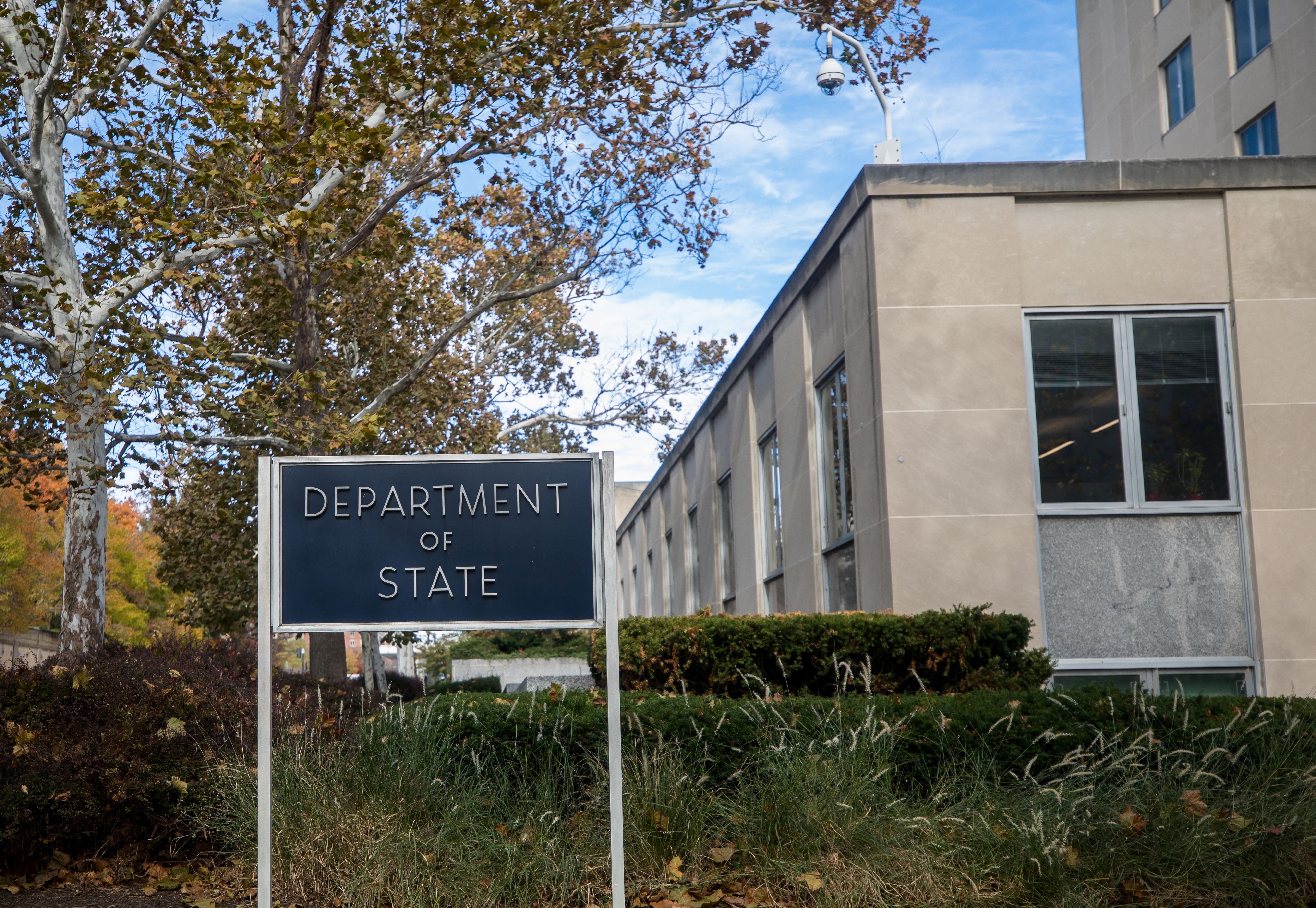
At the same time the Trump Administration is proposing a large increase military spending, it has proposed draconian cuts to the international affairs budget.
Another indication of just how unprecedented and dramatic the Trump Administration’s proposed cut to the international affairs budget can be seen by comparing relative levels of spending on defense and the international affairs budget. The United States has always spent far more on military capabilities than international affairs programs. But the ratio has never been anything near as wide as that proposed by the Trump Administration. This year, the United States will spend roughly $15 on defense for every dollar spent on international affairs programs, only modestly below the 12-to-1 ratio sustained at the height of the Reagan Administration’s Cold War defense buildup. By comparison, under the Trump Administration’s proposed budget, the ratio would expand to 108-to-1 (or 32-to-1, if the proposed rescissions are excluded) in 2026.
As with defense, the United States currently spends more on foreign aid than any other country. But in this case, its edge is far more modest. In 2024, for example, the United States spent roughly as much on “official development assistance” (which accounts for most, but not all, non-military assistance) as the next three highest contributors — Germany, the United Kingdom, and Japan — combined. The cuts included in the Trump Administration’s budget proposal would reduce U.S. spending on these programs to levels comparable to or below those of these U.S. allies. Worse yet, the Trump Administration is proposing deep cuts in some of the most effective U.S. foreign assistance programs — with traditionally very strong bipartisan support — such as global health and humanitarian assistance. Moreover, it has already taken steps to largely dismantle the country’s highly-skilled USAID workforce — which may be even more damaging than the proposed budget cuts.
In the end, how much the U.S. spends on its military and international affairs programs should be based on a careful consideration of both requirements and affordability. A detailed analysis and weighing of these factors are well beyond the scope of this brief article. However, the discussion above suggests that the Trump Administration is pursuing a far more costly and risky approach to defense plans and spending than is needed, while simultaneously starving international affairs programs to a degree that is both dangerous and short-sighted.
Steven Kosiak is a non-resident fellow at the Quincy Institute and a partner at ISM Strategies in Washington, D.C. He is also a senior adjunct faculty member at American University’s School of International Service (SIS) and an adjunct senior fellow at the Center for a New American Security (CNAS).