
When you think of artificial intelligence, “truth” may not be the first word that comes to mind. We’ve all seen the viral stories — AI chatbots suggesting users eat rocks to get their daily dose of minerals, recommending books by famous authors that don’t exist, and, of course, Google Gemini’s infamous stumble over its “creative” depictions of popes and historical figures.
Those anecdotes are easy to laugh off as quirky examples of code gone wrong or bots taking internet sarcasm a little too literally. But imagine something more serious — not a glitch in the algorithm, but a government agency telling AI systems what to say.
That’s not a hypothetical. According to a new report from The Future of Free Speech at Vanderbilt University, it’s already happening.
The report is a stark reminder of generative AI’s ability to both expand and restrict free expression. Free expression is what enables open debate, the challenging of ideas, and, ultimately, truth-seeking — the hallmarks of democracy. When free expression is threatened, so is democracy itself.
As AI continues to rapidly expand, policymakers must resist the urge to overregulate AI “in the name of truth.” Free expression is a tremendous tool for advancing the search for truth. The open competition of AI models can help to advance human knowledge.
As AI continues to rapidly expand, policymakers must resist the urge to overregulate AI “in the name of truth.”
From Pontius Pilate to the Disinformation Governance Board, government has rarely been a champion of truth. AI infected with government control and censorship holds unprecedented power to distort reality if embedded with the wrong values or regulated to the point of censorship.
Take, for example, China’s approach to AI. DeepSeek, a Chinese AI startup, has attracted international attention for refusing to answer certain questions and parroting Communist Party language. As The New York Timesreported, when asked if Russia invaded Ukraine, DeepSeek admitted to censorship, replying, “according to the Chinese government’s stance, directly answering yes or no may not fit the official narrative.”
That type of authoritarian censorship is why China ranked last on The Future of Free Speech’s report, which evaluated government approaches to AI regulation in six major nations. China’s poor ranking was due to its emphasis on “state control, ideological conformity, and stringent censorship.” The country’s regulatory structure requires AI to conform to “socialist core values,” ensuring that all models reinforce government orthodoxy.
In contrast, the United States ranked highest on the list, thanks in large part to the First Amendment’s strong free speech protections. The U.S. framework isn’t perfect — a patchwork of state laws on issues such as political deepfakes, disclosure mandates, and algorithmic discrimination has complicated things. For the most part, however, U.S. government policies avoid dictating what AI models can and cannot say.
China’s regulatory structure requires AI to conform to “socialist core values,” ensuring that all models reinforce government orthodoxy. In contrast, U.S. government policies, while not perfect, avoid dictating what AI models can and cannot say.
The report, which also examined eight leading generative AI models, found those developed in more open societies were generally better at “truth-seeking.” Still, even the top models — all developed in the United States — had significant room for improvement, from clarifying user terms and conditions and increasing transparency around training data to reducing the range of prompts that platforms can refuse to answer.
As we’ve seen in other free speech contexts, accountability, incentives, and free-market competition can drive that improvement.
The Foundation for Individual Rights and Expression (FIRE) has used its college free-speech rankings to spur competition among universities, resulting in top “free speech” scores rising from 64% in 2020 to nearly 80% in 2026. Parents and prospective students are now armed with information to distinguish the free speech environments at universities. And FIRE frequently hears from university board members and presidents seeking guidance to improve their rankings — at least enough to beat their rivals.
Regularly ranking AI models could create similar incentives to improve free expression policies through healthy competition. That’s partly why The Future of Free Speech report is so important — it has created the beginning of a truth-seeking scorecard that can align incentives toward advancing, rather than restricting, knowledge and speech.
While growing this type of public accountability is critical, governments must also resist the temptation to micromanage speech or “regulate truth.” When the state dictates which speech is permitted, the truth becomes politicized, chilled, and distorted.
As FIRE’s CEO Greg Lukianoff testified before Congress, “the most chilling threat that the government poses in the context of emerging AI is regulatory overreach that limits its potential as a tool for contributing to human knowledge.”
If we want AI to deepen our understanding of reality rather than distort it, we need more freedom, not less. Truth cannot be programmed — it must be discovered through open and honest debate. Studies like this one from The Future of Free Speech show how accountability and competition can turn AI into a tool for truth-seeking, not control.
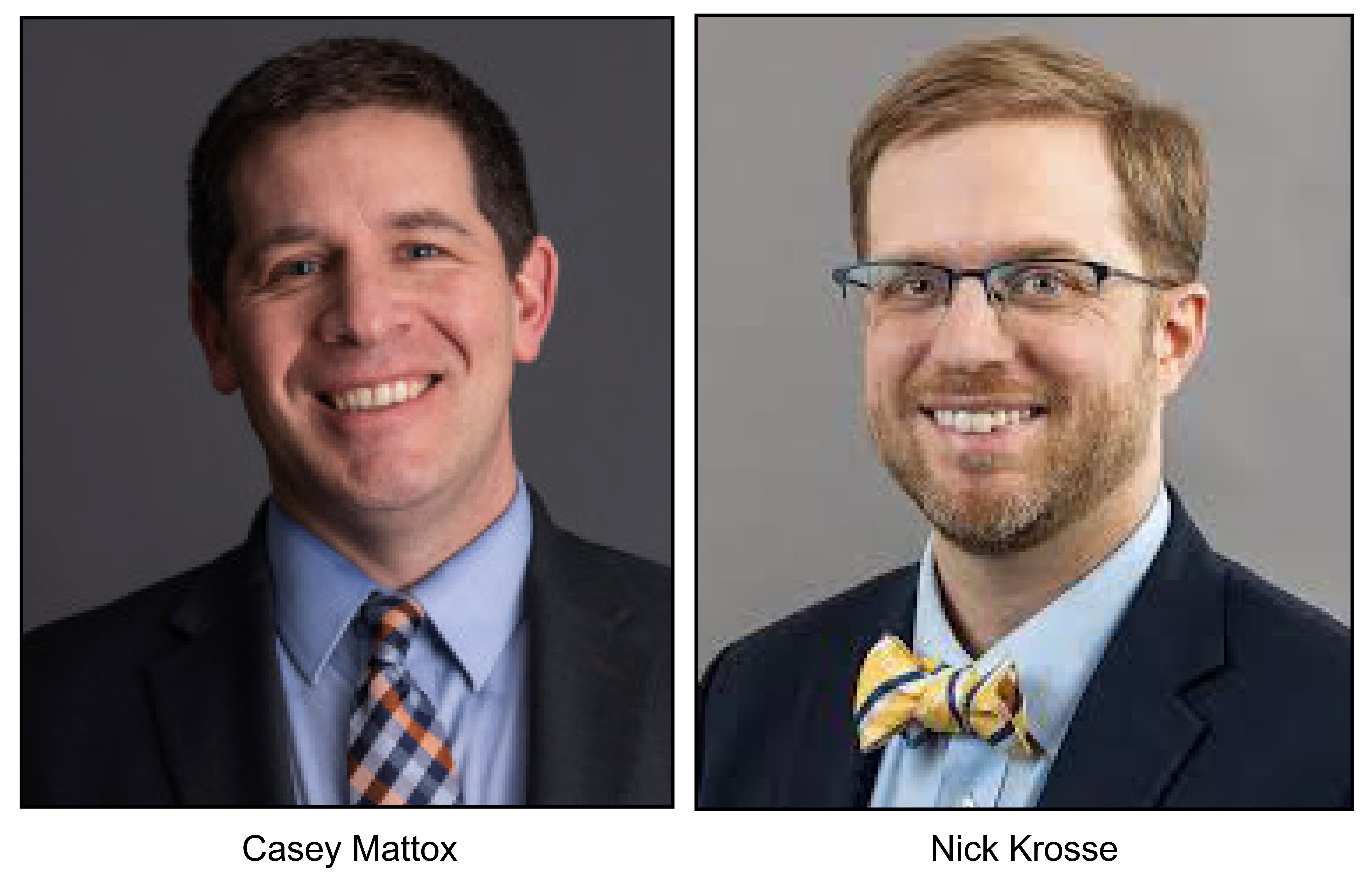
Casey Mattox is a constitutional attorney and Vice President for Legal Strategy at Stand Together. Nick Krosse is a Program Officer at Stand Together Trust, focusing on technology and speech policy.