

Currently, only 4 percent of Americans have a “great deal” of confidence in Congress. That dismal number highlights a deep and growing trust gap between citizens and their elected representatives. It’s not hard to see why.
Threats of a government shutdown have become an annual tradition. The 118th Congress, which concluded on January 3, 2025, was the least productive Congress since at least the 1980s. And polarization has roiled the American public, resulting in politically motivated violence against liberals and conservatives alike. Against this backdrop of dysfunction, the question becomes: what sources of leadership can still inspire confidence and unify Americans?
When I left the Marine Corps, I took with me a conviction that I hold to this day: even after the uniform comes off, veterans have an obligation to continue serving our country.
That belief shaped the founding of With Honor, an organization dedicated to advancing principled, elected veteran leadership, alongside my fellow Marine Corps veteran Peter Dixon and David Gergen, a Navy veteran and preeminent statesman who had served in presidential administrations of both parties.
The poll, conducted with more than 2,000 Americans this summer, reveals something extraordinary in a divided time — majorities of Americans trust veterans to put country ahead of party, to bridge divides, and to lead in crisis.
At David’s urging, we committed to grounding our work in data, ensuring that our assumptions about veterans’ impact on public trust and leadership could withstand real scrutiny, which led us to partner with Gallup to rigorously test how Americans perceive veterans.
The poll, conducted with more than 2,000 Americans this summer, reveals something extraordinary in a divided time — majorities of Americans trust veterans to put country ahead of party, to bridge divides, and to lead in crisis.
These findings are not only statistically significant, but also culturally significant. In an era where cynicism about government is pervasive, the perception of veterans as trusted, mission-driven leaders represents one of the few bipartisan points of agreement left in American politics. That trust is not automatic; it is earned through experiences of service, sacrifice, and teamwork under pressure. It also reflects a hunger in the electorate for leaders who embody humility and accountability, qualities often absent in today’s political theater.
At a moment when confidence in our government is near historic lows, these findings underscore a truth many of us know from experience: veterans bring not just competence, but credibility and humility needed to restore faith in our institutions.
The Numbers Speak Loudly
Statistics alone do not restore trust, but they point toward a path worth pursuing. According to the With Honor-Gallup poll:
-55 percent of Americans are more likely to vote for a candidate with military service, more than for government or business backgrounds.
-83 percent of Americans believe veterans have strong leadership skills.- 78 percent of Americans trust veterans to put country before party.
-77 percent of Americans say veterans work well with diverse backgrounds.
-75 percent of Americans believe veterans understand complex global security issues.
These are not abstractions. They reflect what Americans crave — leaders who rise above partisanship, who know the value of sacrifice, and who have proven their ability to unify across differences.
In an era where cynicism about government is pervasive, the perception of veterans as trusted, mission-driven leaders represents one of the few bipartisan points of agreement left in American politics.
Importantly, this trust cuts across demographic and partisan lines. Whether Democrat, Republican, or Independent, Americans consistently expressed higher confidence in veterans than in almost any other category of public leader. This suggests that veterans occupy a rare position in our fractured civic landscape: they can serve as connective tissue between groups that otherwise view each other with suspicion. That bridging capacity may be one of the most valuable resources we have for renewing democracy.
Proof in Action: The For Country Caucus
The For Country Caucus, a bipartisan group of 37 military veteran lawmakers, was founded on these very insights. Members have taken a pledge to meet across party lines, build trust, and advance legislation that strengthens national security, supports veterans and their families, and expands opportunities for national service.
And they deliver. Together, Republicans and Democrats have:
-Authorized the Global War on Terrorism Memorial on the National Mall.
-Led the Military Quality of Life Panel, which yielded a 10 percent pay raise for service members most vulnerable to food insecurity.
-Instituted an improved process for service members to seek mental health support.
-Passed key provisions to strengthen our nation’s cybersecurity, position the Department of Defense to adopt emerging technologies like AI and biotechnology, and identify and address critical supply chain vulnerabilities.
Symbolism matters too. Each Memorial Day, members gather to wash the Vietnam Veterans Memorial together. This past spring, the Co-Chairs of the caucus, Rep. Jake Ellzey, a Republican from Texas, and Rep. Don Davis, a Democrat from North Carolina, stood shoulder to shoulder, cleaning the wall. Their message was clear — for veterans, this country is still worth setting aside politics in pursuit of shared ideals.
These acts may seem small compared to landmark legislation, but they are deeply resonant. They demonstrate that unity is not only possible, but it is already happening in pockets of Congress where veterans are leading. By modeling respect, discipline, and a mission-first ethos, the For Country Caucus provides a glimpse of what politics could look like if service, rather than self-interest, were the organizing principle.
A Call to Renew Service
If Americans are searching for proof that democracy can be repaired, the experience of veterans in public life offers both evidence and inspiration. Our country faces a legitimacy crisis. Too many doubt that the government can function, let alone represent them. Our poll indicates that veterans continue to hold the public’s trust. We cannot squander it.
We must encourage more veterans to engage in civic life. We should support caucuses like the For Country Caucus that model bipartisan compromise and principled leadership. And we should expand national service so more young Americans, whether uniformed or not, gain the perspective that comes from putting country above self.
The findings affirm what I have long believed — service is the antidote to division. Veterans are not immune to politics, but they carry experiences that Americans overwhelmingly trust. That trust is precious, and we must use it to restore confidence in our institutions, to show the world that America can still unite, and to prove, together, that patriotism will always outlast politics.
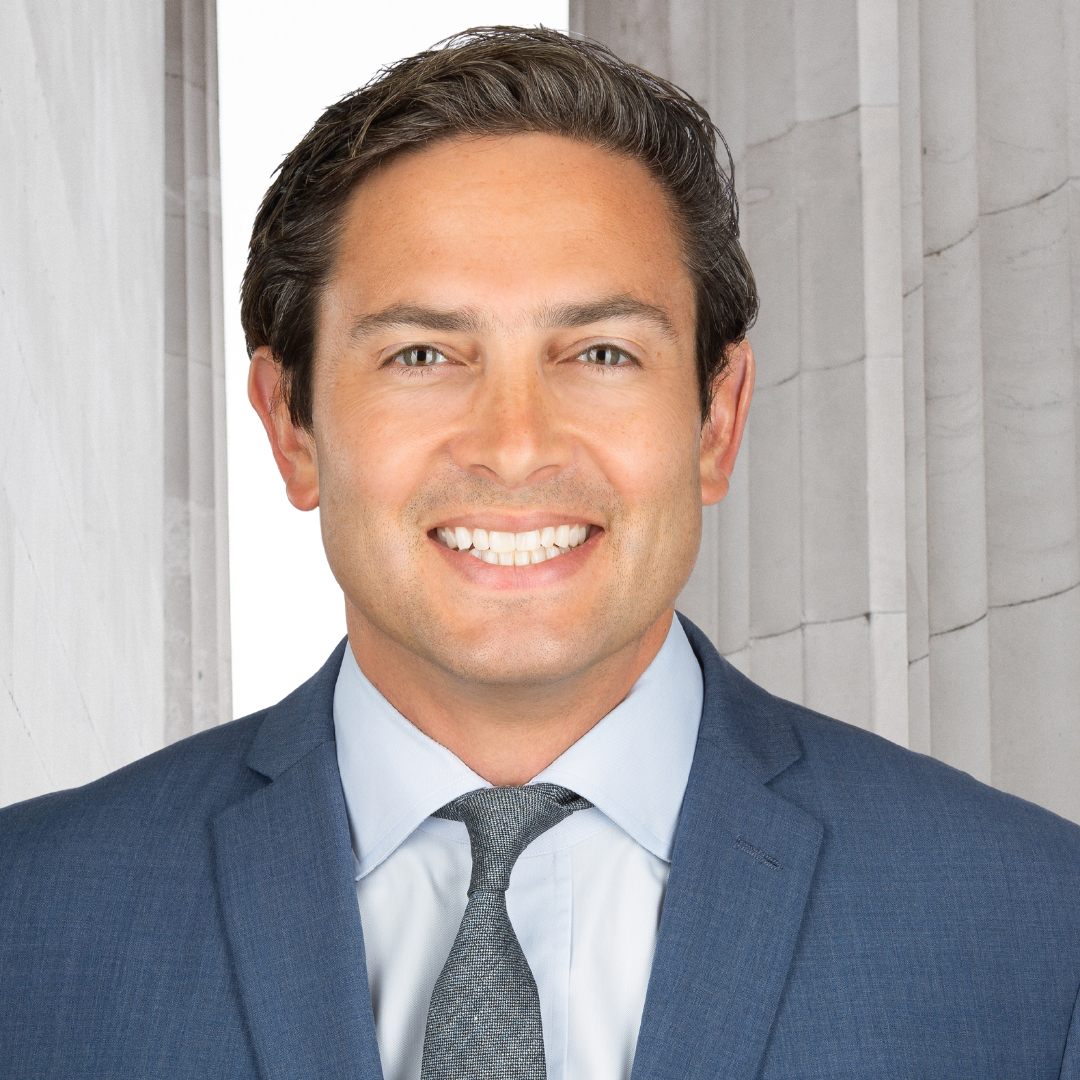
Rye Barcott is co-founder and CEO of With Honor, a nonprofit and political action committee that fights polarization in Congress by recruiting, electing, and supporting principled veterans who pledge to serve with integrity, civility, and courage across party lines. Together, the nearly 50 Members of Congress that With Honor Action supports have passed more than 250 bipartisan laws focused on national security, national service, and veterans affairs. Barcott served in the U.S. Marine Corps in Fallujah, Iraq, is the author of “It Happened on the Way to War,” and cofounder of the investment firm Double Time Capital. He is a graduate of UNC-Chapel Hill, Harvard Business School, and Harvard Kennedy School.