


America’s federal permitting process is broken, and our capacity to innovate, produce, compete and lead globally is at risk. Every sector of the economy has been subject to permitting delays that result in lost time, jobs and economic opportunity.
According to the National Association of Home Builders, permitting regulations at all levels of government account for 41 percent of the cost of a multifamily development; these costs are ultimately passed on to American families as higher housing costs. This is just one example of the hidden costs that permitting delays impose on our economy and cost of living.
But it’s not just builders who are facing challenges with the permitting process. Recently in Arizona, after twelve years of lawsuits and delays, the Resolution Copper Mine cleared the final hurdle. This mine will strengthen our domestic copper supply chains and reduce our dependence on foreign adversaries for our critical mineral needs. It will also support thousands of good-paying jobs.
America produces energy and minerals cleaner, safer and more efficiently than anywhere else in the world. But those benefits cannot come to fruition if the infrastructure isn’t built. The twelve years of lawsuits challenging Resolution Copper are a prime example of how our federal permitting process has opened the door to endless delays that drive up costs, halt economic growth and stifle American innovation. By fixing the permitting process, we will enable our nation to do what it does best – innovate, produce and build – and every American will benefit.
America produces energy and minerals cleaner, safer and more efficiently than anywhere else in the world.
Although it was well-intentioned, the National Environmental Policy Act of 1969’s (NEPA) prolonged analysis and constant litigation risk pose significant barriers to critical infrastructure projects. The process has become so complex that NEPA documents can total over 1,000 pages. Protracted analysis and the endless litigation it breeds increase project costs, disincentivize investment and kills American economic opportunity.
The National Association of Manufacturers and the Foundation for American Innovation recently released a joint report titled “America on Hold” that shows how permitting delays cost manufacturers at least $7.9 billion every year. In addition, 87 percent of manufacturers surveyed reported they would expand business operations, hire more workers or increase wages and benefits if we fix the permitting process. This study provides evidence of what we already know – America wants to build, grow and flourish. There are investors and industries ready to begin projects in every state across our country; they just need a streamlined permitting process to unleash them.
This is why I partnered with U.S. Rep. Jared Golden (D-Maine) to pass out of the House the bipartisan Standardizing Permitting and Expediting Economic Development (SPEED) Act, which will create certainty in the permitting process and spur domestic investment in critical infrastructure, energy and industry.
By fixing the permitting process, we will enable our nation to do what it does best – innovate, produce and build – and every American will benefit.
The SPEED Act will right-size the federal permitting process while continuing to encourage local public involvement in project development. Local communities know best the impacts of a potential project. The SPEED Act includes counties, boroughs and parishes upfront in the process, and ensures timely and concurrent coordination and review across the government.
In addition to making the NEPA process more effective and efficient, it will get America’s builders out of the courtroom and back to the construction site by implementing judicial review reforms to curtail frivolous and obstructionist litigation. The SPEED Act will establish limitations on NEPA claims, including a 150-day filing deadline, while preventing courts from killing projects solely on the basis of bureaucratic process infractions.
The federal permitting process in America is broken, but not beyond fixing. Permitting reform is a bipartisan issue, affecting Democratic and Republican districts alike. A bipartisan and bicameral permitting reform deal is possible, but time is of the essence. It’s time for Congress to act to get permitting reform across the finish line. Doing so benefits every American by lowering costs, creating jobs, spurring investment in local communities and letting America Build Again.
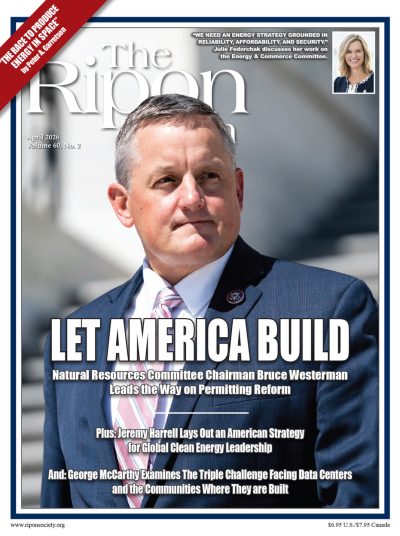
Bruce Westerman represents Arkansas’ Fourth Congressional District in the U.S. House of Representatives, where he serves on the Committee on Transportation and Infrastructure and as Chairman of the Committee on Natural Resources.