


Special semiquincentennial edition features essays by Evelyn Farkas, Dory Wiley & Jessica Riedl, plus a Ripon Profile of Oklahoma Governor Kevin Stitt
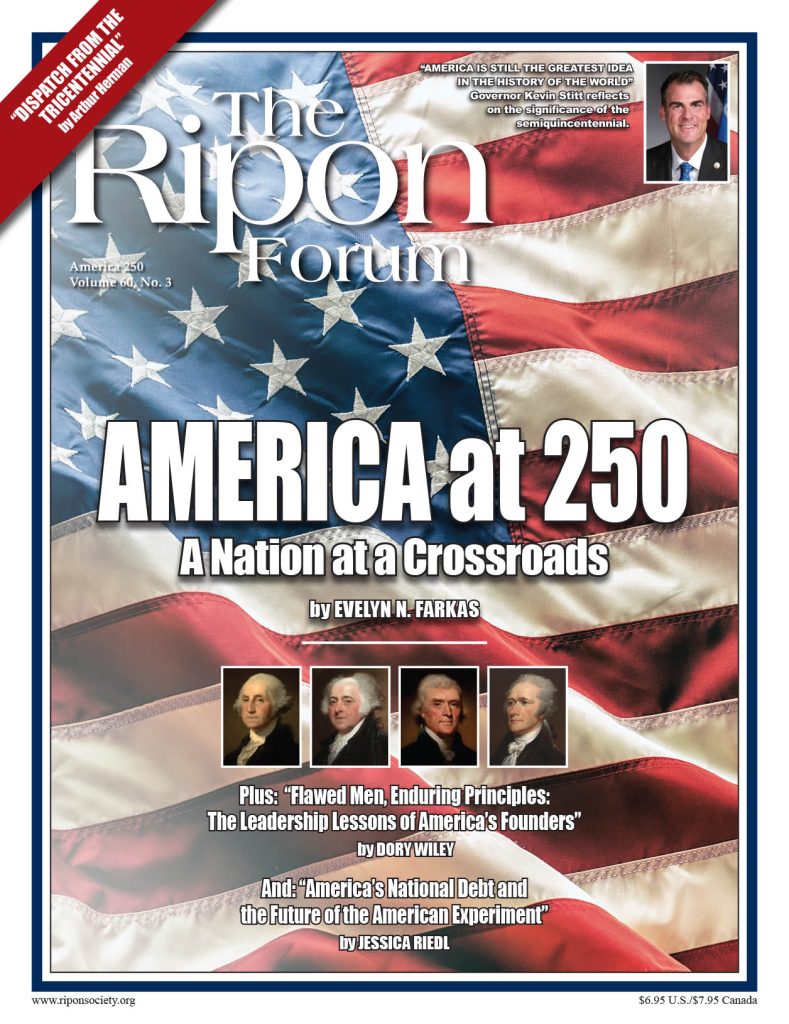
WASHINGTON, DC — With the nation preparing to celebrate the 250th anniversary of its founding, the latest edition of The Ripon Forum marks the semiquincentennial with a special collection of essays examining where America stands at this milestone, how the country has changed over the past half century, and what it will take to carry the experiment into its next 250 years.
In the cover essay for this latest edition, Evelyn Farkas, Executive Director of the McCain Institute, argues that America arrives at its anniversary at a crossroads. “We, undeniably, find ourselves at one of the most dangerous points in American history,” she writes, pointing to a world in which China, Russia, North Korea, and Iran are working together to unravel the international order the United States built. Yet Farkas remains hopeful about the road ahead. “There is a crying need,” she writes, “for a new America to lead the world into this next half century, harness all that is good and productive in our citizens, and lift up all boats at home and on foreign shores.”
To meet these challenges, historian Dory Wiley recommends Americans look to the Founding Fathers for guidance. “They were not demigods,” Wiley writes of the men who risked their lives when they signed the Declaration of Independence. “And yet they produced the most successful experiment in self-government in the history of civilization.” Their shared conviction, Wiley argues, was that “self-government required a virtuous citizenry. Freedom and virtue were not in tension. Freedom required virtue to survive.”
In addition to examining the lessons of the past, this special edition of the Forum also confronts the fiscal math of the present. “Since 2008, the federal debt has leaped from 40 to 100 percent of the economy — nearly matching the World War II peak,” writes Jessica Riedl of the Brookings Institution, who warns that “never before have Americans run up so much debt in peacetime while caring so little.” And in a speculative dispatch from the year 2076, New York Times bestselling author Arthur Herman imagines what the world might look like at the Tricentennial. “I don’t suppose anyone foresaw the day when Ukraine’s high-tech economy would have to bail out a bankrupt Russia, and change the whole complexion of eastern Europe,” Herman writes.
In other essays, MIT historian Christopher Capozzola revisits how the nation marked its Bicentennial in 1976; state leaders Cassandra Coleman of America250PA, Molly Fortune of the South Carolina American Revolution Sestercentennial Commission, and Lynn Forney Young of the U.S. Semiquincentennial Commission describe how Pennsylvania, South Carolina, and Texas are celebrating the moment; Ja’Ron Smith, a former senior advisor in the Trump White House, traces the history of Black Americans and the Republican Party; and Carrie Lukas, president of Independent Women, makes the case that women have much to celebrate at America’s 250th.
The edition also features a debate over whether the American Dream is still within reach, with Adam Michel of the Cato Institute and cultural commentator John Mac Ghionn taking opposing views, along with two charts from the Forum’s staff tracing how Congress and the country have changed since 1976.
And in the latest Ripon Profile, Oklahoma Governor and National Governors Association Chair Kevin Stitt reflects on the milestone. “America is still the greatest idea in the history of the world,” he says.
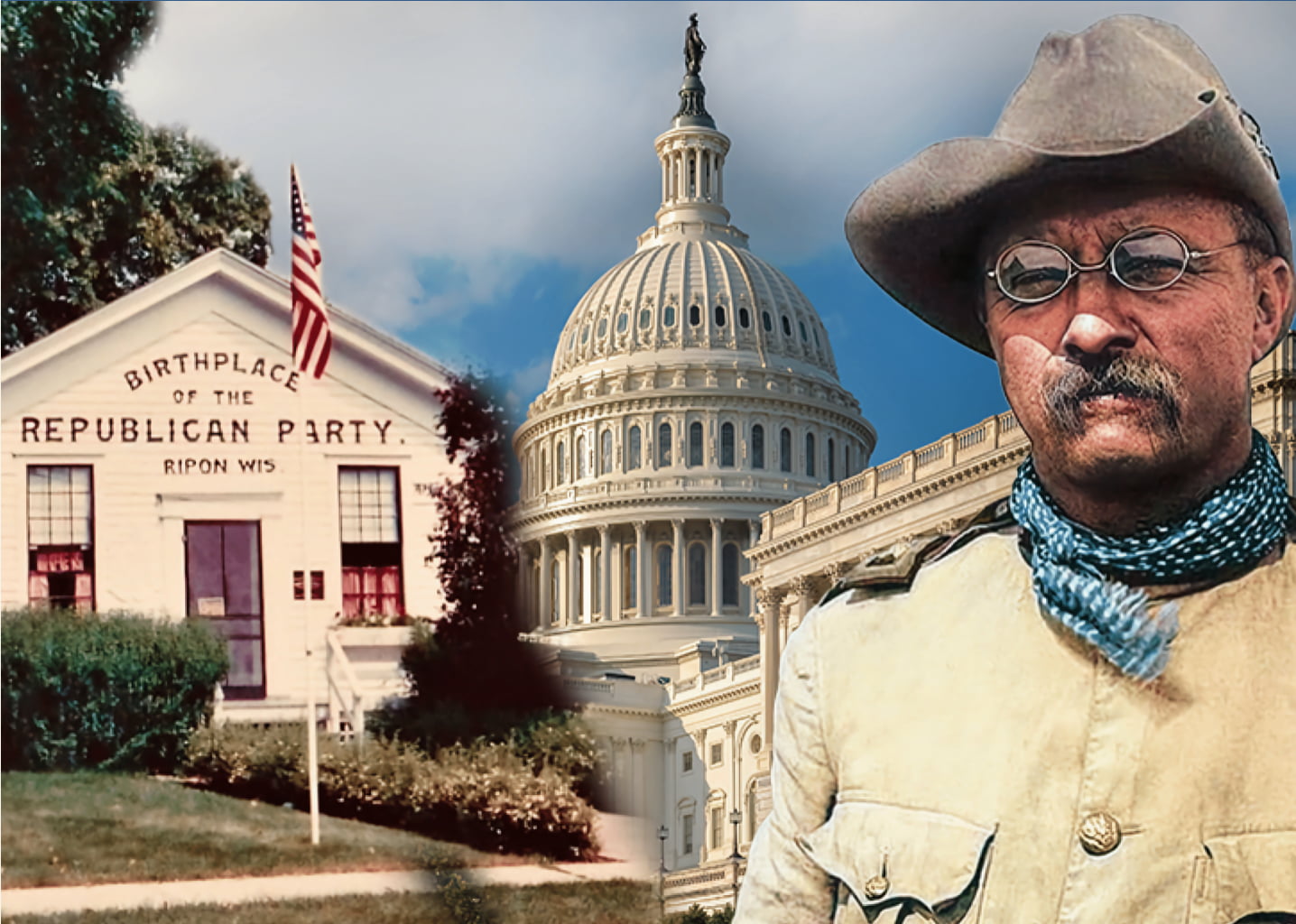
The Ripon Forum is published six times a year by The Ripon Society, a public policy organization that was founded in 1962 and takes its name from the town where the Republican Party was born in 1854 – Ripon, Wisconsin. One of the main goals of The Ripon Society is to promote the ideas and principles that have made America great and contributed to the GOP’s success. These ideas include keeping our nation secure, keeping taxes low and having a federal government that is smaller, smarter and more accountable to the people.