
Politics used to interrupt your television show.
Now it is the television show.
I’ve spent the better part of two decades in communications — presidential campaigns, congressional races, corporate boardrooms, cable news studios, and, for a brief and unforgettable chapter, inside one of the world’s largest social media platforms. Across each stop, I’ve watched one truth become impossible to ignore.
The communications playbook has been rewritten.
Not because television disappeared. It hasn’t.
Not because newspapers stopped mattering. They still do.
But because campaigns no longer decide where voters get their information — or who they trust to deliver it.
The communications playbook has been rewritten. Not because television disappeared or newspapers stopped mattering. But because campaigns no longer decide where voters get their information.
For decades, campaigns chased gatekeepers. Earn the endorsement. Win the Sunday shows. Land above the fold in the morning paper. If you controlled the headlines, you usually controlled the conversation.
Today?
A Twitch streamer can shape more opinions among young voters than an editorial board.
A three-hour podcast can move the needle more than a thirty-second television spot.
And somewhere, a consultant is still wondering why his perfectly worded press release got less engagement than a Golden Retriever riding a Roomba.
Welcome to 2026.
The rise of Hasan Piker is one of the clearest examples of this shift. Whether Republicans agree with his politics isn’t really the point. Millions of Americans choose to spend hours with him every week. That isn’t simply an audience. It’s trust.
Conservatives have built their own version of that ecosystem. Joe Rogan. Theo Von. Barstool. Dozens of creators across X, YouTube, TikTok, Instagram, and Substack. None answer to the Republican National Committee. None receive talking points from party leadership. Yet every day they influence how millions of Americans think about politics.
That’s the revolution.
The middleman is disappearing.
One lesson I’ve learned from campaigns is that every communications revolution eventually feels obvious in hindsight.
Ronald Reagan understood television better than his competitors.
Barack Obama understood digital organizing before anyone else.
Donald Trump instinctively grasped that social media rewarded authenticity, speed, and conflict in ways traditional politics never had.
Each candidate mastered the communications environment of his era.
Today, a Twitch streamer can shape more opinions among young voters than an editorial board and a three-hour podcast can move the needle more than a thirty-second television spot.
The mistake is believing the environment stops changing.
Today, campaigns aren’t simply competing against one another.
They’re competing against Netflix, the NFL, TikTok, YouTube, group chats, fantasy football, and whatever else occupies the six-inch screen in a voter’s hand.
Politics isn’t competing with politics anymore.
It’s competing with everything.
That changes how candidates have to communicate.
The old model prized message discipline above all else. Stay on script. Avoid surprises. Read the talking points.
That still matters.
But voters increasingly reward something campaigns have always struggled to manufacture: authenticity.
Not perfection.
Not polish.
Authenticity.
People don’t expect candidates to be flawless. They do expect them to sound like actual human beings.
Ironically, that’s become harder as campaigns have become more sophisticated.
So who has the advantage heading into this fall?
Republicans have generally adapted more comfortably to decentralized media. Conservatives invested early in podcasts, independent creators, and platforms that bypassed traditional gatekeepers. Many Republican candidates now appear as comfortable sitting for a two-hour podcast as they once were giving a stump speech.
Democrats, meanwhile, continue to benefit from influential creators across entertainment and popular culture, particularly among younger audiences. They remain exceptionally effective at generating online enthusiasm around candidates and causes.
Neither advantage is permanent.
Algorithms change.
Platforms evolve.
Remember Vine?
Exactly.
Trust lasts longer.
Campaigns still need money. They still need volunteers. They still need compelling ideas.
But before any of those matter, they have to earn something far more difficult.
Attention.
That’s the real battleground in modern politics. Not because attention wins elections by itself— but because without it, nothing else has the chance to.
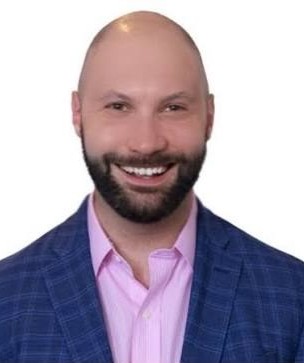
Matt Gorman is Chief Communications Officer for Targeted Victory. A veteran of three presidential campaigns, he most recently served as a senior advisor to Tim Scott for America. Before that, he was Communications Director for the National Republican Congressional Committee, where he was named to POLITICO Playbook’s Power List.